November Beaver Moon Livestream: Watch the 2026 Supermoon
November Beaver Moon Livestream: Watch the 2026 Supermoon
November’s full Beaver Moon is scheduled for November 24, 2026. An online supermoon livestream is expected to help skywatchers follow the event from home, especially where clouds, city lights, inconvenient moonrise times, or daylight interfere with local viewing. Source 1
Viewers will have two options: watch through an official astronomy broadcast or observe the Moon outdoors when it rises locally. The exact livestream URL and start time have not yet been confirmed, so verify them through the official event page or a trusted astronomy channel before viewing.
November Beaver Moon update
- Date: November 24, 2026
- Event: November’s full Beaver Moon
- Format: Online supermoon livestream
- Exact broadcast time: Confirm before viewing
- Official link: Use the verified Space or astronomy-channel URL when available
How to Watch the November Beaver Moon Livestream
Find the Official Broadcast
The safest way to watch the Beaver Moon online is through an official Space event page, observatory website, or verified astronomy video channel. The available source identifies November 24, 2026, as the date for the coverage but does not provide a confirmed livestream URL or exact start time. Source 1
A legitimate broadcast should clearly identify its publisher, observatory, or astronomy organization. It should also list the event name, date, schedule, and whether the program is live or a replay.
Avoid random video pages that request unusual downloads, unnecessary personal information, or payment details to view a public astronomy event. Use the official event page or verified publisher channel after the broadcast link is published.
What Time Does the Livestream Start?
The supplied source confirms the date but not the exact start time. Check the official event page, video description, or publisher schedule before November 24, 2026. Convert the listed time to your local time zone and confirm the local calendar date.
The broadcast may begin before the exact full Moon phase. Early coverage could show moonrise, the approach to maximum illumination, astronomy commentary, or views from several observing locations. The stream may therefore start hours before the Moon is technically full.
What If the Livestream Is Delayed?
Open the official page shortly before the scheduled broadcast. The video may appear as scheduled, live, delayed, or available as a replay.
If the stream does not begin immediately, refresh the page once or check the publisher’s verified social channels for a delay notice. Weather can affect a ground-based broadcast, particularly when it depends on a specific observing location.
A replay can still provide detailed views and expert commentary, but it is not live footage. Distinguish a replay or photo gallery from a real-time broadcast of November 24, 2026.
When and Where to See the Beaver Moon
November 24, 2026, Is the Key Date
November 24, 2026, is the date identified for the November full Beaver Moon livestream. Source 1
The best local viewing time depends on your location. Moonrise, moonset, cloud cover, buildings, trees, and the Moon’s height above the horizon all affect visibility. The exact full phase may occur during daylight or while the Moon is below the horizon in some regions.
Use a reliable astronomy app, observatory calendar, or skywatching tool to check:
- Local moonrise and moonset
- The Moon’s direction on the horizon
- The Moon’s altitude during the evening
- The exact full Moon time
- Local weather and cloud cover
Is the Beaver Moon Visible Worldwide?
The full Moon is generally visible from much of Earth’s nighttime side when weather conditions are favorable. Some locations may see moonrise before the exact full phase, while others may see the Moon shortly after maximum fullness.
The Moon can look fully illuminated for more than one night, even though the astronomical full phase occurs at one precise moment. If clouds block the Moon on November 24, the surrounding nights may still offer an attractive view.
An online broadcast can help when daylight, cloud cover, or the local horizon makes direct observation difficult.
Best Time to Watch the Moon
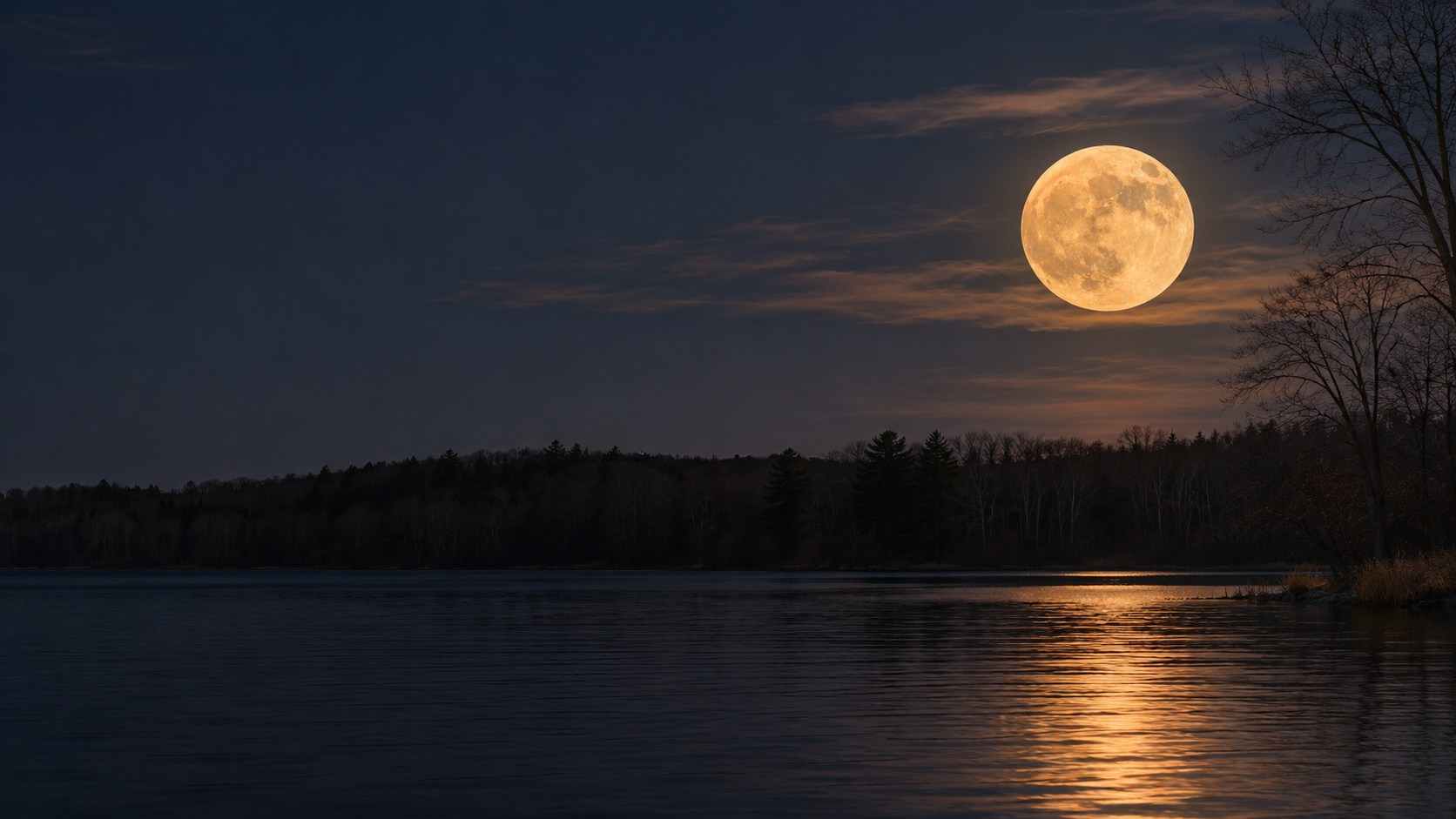
Moonrise often provides the most dramatic view. The Moon appears near buildings, trees, mountains, or a city skyline, creating a strong sense of scale. Once it rises higher, the reduced obstruction can provide a clearer view of lunar features.
Binoculars can reveal craters and dark lunar plains, although a telescope is not necessary. For the closest match to the astronomical event, check the official full Moon time. For the best practical observation, prioritize clear weather and an unobstructed horizon.
Why Is It Called the Beaver Moon?
“Beaver Moon” is a traditional seasonal name for November’s full Moon, not an official astronomical classification.
The name is commonly associated with beaver activity before winter. November historically marked a period when beavers were active around their lodges and when people prepared for colder conditions. Some traditions also connect the month with trapping beavers and preparing their pelts.
Full Moon names developed through different cultural and regional traditions. They may describe seasonal patterns, animal behavior, weather, farming, hunting, or winter preparation. The Beaver Moon name is therefore cultural rather than scientific.
Different communities may use other names for November’s full Moon. No single naming tradition represents every culture.
What Makes This Beaver Moon a Supermoon?
A supermoon occurs when a full Moon happens near the Moon’s closest approach to Earth in its elliptical orbit. Because the Moon is slightly closer, it can appear somewhat larger and brighter than an average full Moon.
The difference is modest. Most viewers will not see a dramatic size change with the unaided eye. The term describes the Moon’s orbital position, not a separate type of lunar event. Space coverage has previously highlighted the Beaver Moon as a striking supermoon for skywatchers and photographers. Source 3
Why the Moon Looks Huge Near the Horizon
The Moon illusion makes the Moon appear larger when it is near the horizon. Buildings, trees, mountains, and skylines provide familiar objects for comparison, causing the Moon to seem unusually large.
The Moon’s physical size does not increase near the horizon. Its apparent size remains nearly unchanged, even when it looks enormous above a landscape. This effect creates strong opportunities for Beaver Moon photography.
How to Watch Without a Telescope
Choose a safe location with a clear view toward the eastern horizon during moonrise. A park, open field, elevated viewpoint, or accessible public area may work if local rules permit nighttime use.
Look for:
- Limited obstruction from buildings and trees
- Reduced artificial light
- Safe access and stable ground
- A clear horizon
- Space for a tripod or camera
A telescope is optional. The full Moon is easy to see with the unaided eye, while binoculars can reveal craters, dark lunar plains, and bright rays around impact features.
Check the weather before going outside. Cloud cover, humidity, and visibility can change quickly. Moon viewing is safe with the unaided eye and does not require solar filters. Never use an unfiltered telescope or binoculars to look at the Sun.
How to Photograph the November Beaver Moon
Smartphone Photography
Clean the camera lens, then place the phone on a stable surface or tripod. Tap the Moon to focus and lower the exposure so its surface does not become a white, featureless spot. Use a timer to reduce movement when pressing the shutter.
Digital zoom may reduce image quality. Use optical zoom when available and crop the image later. Including a tree, mountain, building, or skyline gives the Moon context and creates a stronger composition.
Camera and Telephoto Lens Settings
A telephoto lens can record more lunar detail. Start with manual focus near infinity, a low ISO, and a fast shutter speed. Choose an aperture suited to the lens and adjust the settings as conditions change.
No single setting works for every situation. Exposure depends on lens length, atmospheric conditions, Moon altitude, sensor performance, and the brightness of the surrounding landscape. Take several exposures and adjust shutter speed, ISO, or focus as needed.
Photograph the Moonrise
Determine the moonrise direction and select a foreground subject before the event. Position the camera in advance, use a tripod, prepare several focal lengths, and take multiple exposures as the Moon climbs.
The Moon becomes brighter quickly, so exposure settings may need frequent adjustment. A photography app can help estimate the Moon’s position relative to a building, hill, or landmark. This planning method also worked well for previous full Moon events, including the October Hunter’s Moon. Source 7
What to Expect From the Livestream
A professional livestream may provide telescope footage, wide-angle landscape views, moonrise coverage, astronomy commentary, or viewer questions. Features depend on the final schedule and observing conditions.
Online viewing can help people without binoculars or telescopes and those facing cloudy skies. It may provide stable close-up views, expert explanations, and coverage from a location with better weather.
A livestream complements local observation rather than replacing it. A broadcast shows the event through a camera, while outdoor viewing reveals the Moon in your own sky.
Online content usually falls into three categories:
- Live broadcast: Real-time coverage.
- Replay: A recording shown after the event.
- Photo gallery: Images captured earlier.
Previous Beaver Moon images may provide useful context, but they are not live footage of November 24, 2026. Source 3 presents Beaver Moon supermoon photography, while Source 1 identifies the future livestream date. Source 1
Common Viewing Mistakes
Confusing the Full Moon Date With the Livestream Date
The broadcast date and local full Moon date may differ after time-zone conversion. Check the official schedule and confirm both the local date and start time.
Expecting a Dramatically Larger Moon
A supermoon can appear slightly larger and brighter, but the difference is subtle. The Moon illusion, a clear horizon, and a strong foreground may create a more noticeable effect.
Using Unverified Livestream Links
Use official Space, observatory, publisher, or astronomy-organization pages. Avoid misleading countdowns, repeated redirects, suspicious downloads, or claims of exclusive access from unknown websites.
Waiting Only for the Exact Peak
Clouds, daylight, and the Moon’s position can make the exact full phase inconvenient. Watch on a surrounding night if local conditions are better. The Moon can appear nearly full before and after the official peak.
Quick Guide
- Event: November’s full Beaver Moon
- Date: November 24, 2026
- Best online source: Official Space event page or verified astronomy channel
- Exact start time: Confirm before viewing
- Local viewing: Check moonrise, weather, and time-zone conversion
- Equipment: No telescope required; binoculars and cameras are optional
- Safety: Moon viewing is safe with the unaided eye
Conclusion
The November Beaver Moon livestream is scheduled for November 24, 2026, according to the supplied Space report. Source 1
Before the event, bookmark the verified broadcast page, confirm the local start time, check the weather, and prepare an outdoor viewing location or camera. The Moon may remain visually impressive before and after the exact full phase, giving viewers more than one chance to observe it.
Frequently Asked Questions
When is the November Beaver Moon livestream?
The supplied source identifies the supermoon livestream for November 24, 2026. Confirm the official start time and broadcast link before watching.
What time will the Beaver Moon be full?
The exact full Moon time is not provided in the supplied sources. Check a reliable astronomy calendar or the official livestream schedule, then convert it to your local time zone.
Why is November’s full Moon called the Beaver Moon?
The name is a traditional seasonal term associated with beaver activity, winter preparation, and historical beaver trapping. Naming traditions vary across cultures and regions.
What makes the Beaver Moon a supermoon?
A supermoon occurs when a full Moon happens near the Moon’s closest approach to Earth. It can appear slightly larger and brighter than a typical full Moon, although the difference is subtle.
Can I see the Beaver Moon without a telescope?
Yes. The full Moon is visible to the unaided eye when it is above the horizon and weather conditions are favorable. Binoculars can reveal additional lunar detail.
What if I miss the live broadcast?
Look for an official replay from the same publisher, observatory, or astronomy organization. The Moon may also appear nearly full on surrounding nights, allowing for local observation.
Related Articles
-
 Ancient Quasar Found 630 Million Years After Big Bang
-
 APOD Nov. 25, 2026: SPHEREx Sees Through Dust
-
 Canadian Astronaut’s Wife Gives Birth During ISS Mission
-
 Beaver Supermoon: Meaning, Viewing, and Photography Guide
-
 Scientists Send a Message Through a Brick Wall Using Gravity
-
 Voyager 1 Loses Science Data Near One Light-Day
-
 NASA IBEX Reveals a Shifting Heliotail
-
 Spacecraft Reaches Mercury After Eight-Year Journey
-
 Earth’s Core May Preserve a 4.5-Billion-Year-Old Secret
-
 Webb Finds Possible Stellar Layer Mixing Before Cas A
-
 How to See November’s Beaver Moon Supermoon
-
 Voyager 1 Faces New Data Glitch in Historic Mission
-
 BepiColombo Mercury Arrival Clouded by Thruster Glitch
-
 Nature vs. Nurture: How Much Do Genes Matter?
-
 Voyager 1 Reaches a Reported One Light-Day From Earth
-
 17 Best Voyager 1 Photos and Why They Matter