Welopōʻai: A Triple-Star System 28 Light-Years Away
Welopōʻai: A Nearby Triple-Star System With a Hidden White Dwarf
Astronomers have identified a remarkable triple-star system approximately 28 light-years from Earth. Known as Welopōʻai, the system appears to include a previously hidden white dwarf, adding an unexpected chapter to its evolutionary history.
The discovery is significant because nearby stars can be studied in greater detail than distant systems. Researchers may be able to track the stars’ movements, measure their gravitational interactions, and test models of how multiple-star systems form and survive over time.
What Is Welopōʻai?
Welopōʻai is described as a system containing three gravitationally connected stars. A triple-star system is not simply three stars that appear in the same direction from Earth; its members are bound together by gravity and influence one another’s motion.
Many triple systems have a hierarchical structure. Two stars form a relatively close inner pair, while a third star follows a wider orbit around them. This arrangement can improve long-term stability by separating the inner and outer orbits.
Available reports do not provide complete orbital measurements for Welopōʻai. The distances between its stars, their orbital periods, and the precise way they move around one another remain subjects for further study.
Why the Distance Matters
A light-year measures distance, not time. It is the distance light travels in one year, so a system approximately 28 light-years away is observed as it appeared roughly 28 years before its light reached Earth.
In astronomical terms, Welopōʻai is close enough for detailed follow-up observations. Astronomers can monitor changes in position, search for motion caused by unseen companions, and attempt to separate faint objects from brighter neighboring stars. Proximity does not guarantee easy detection, however. A faint remnant can remain hidden beside a much brighter star.
The Hidden White Dwarf
A white dwarf is the dense stellar remnant left after a star has completed its ordinary fusion-powered life. The star loses its outer material and leaves behind a compact core that gradually cools rather than continuing ordinary hydrogen fusion.
White dwarfs can be difficult to detect directly. A nearby main-sequence star may overwhelm the remnant’s light, making its gravitational influence easier to observe than its image.
The reports about Welopōʻai describe one member as a previously hidden white dwarf. They do not provide enough information to confirm its exact mass, temperature, size, or age. Those properties require the full scientific study and additional observations.
How an Unseen Companion Can Be Detected
An unseen companion can reveal itself through gravity. If a visible star moves in a way that cannot be explained by its known motion, astronomers may infer that another object is affecting it.
Repeated measurements can reveal shifts in position, changes in radial velocity, or an apparent orbit around a shared center of mass. Such evidence can help distinguish a white dwarf from an ordinary faint star, although the conclusion depends on the quality and duration of the observations.
“Previously hidden” does not necessarily mean that the white dwarf was invisible at every wavelength. It means that the remnant was not previously recognized as part of the system.
Why Triple-Star Systems Are Difficult to Explain
Three gravitationally interacting stars create a more complex environment than a binary system. Each star affects the other two, and small gravitational effects can accumulate over long periods.
Triple systems are not automatically unstable. Many can survive for extremely long periods when arranged hierarchically, with a close inner pair and a more distant third star. The challenge is determining whether a particular system could have reached its current configuration and retained it through billions of years of stellar evolution.
Welopōʻai is especially interesting because one member appears to have already become a white dwarf. Its progenitor would once have been a normal star that expanded, lost mass, and changed the system’s gravitational balance before becoming a compact remnant.
How the White Dwarf May Have Changed the System
A star’s mass loss can affect the orbits of its companions. Depending on how quickly material escaped, how much was lost, and how the stars were arranged, the system’s orbits may have widened, shifted, or become more eccentric.
In some configurations, mass loss could weaken the system’s binding and increase the chance that one member eventually separates. In others, the system could remain stable while adapting to the change. These are general possibilities, not confirmed explanations for Welopōʻai.
The white dwarf may preserve evidence of the system’s earlier history. By comparing its properties with the present-day orbits of the other stars, researchers can test whether stellar evolution and gravitational interactions produced the observed arrangement.
What Makes Welopōʻai Unusual?
Welopōʻai is not described as a violation of established physics. Instead, it may be difficult to explain using current models of triple-star formation, evolution, or stability.
A system that challenges a model does not necessarily disprove it. It may show that an assumption is incomplete, that an uncommon formation pathway was overlooked, or that the system’s architecture differs from the simplest theoretical scenario.
The key questions include:
- Which stars form the inner and outer parts of the system?
- How wide and stable are their orbits?
- Where does the white dwarf fit within the hierarchy?
- Did mass loss alter the system’s present configuration?
- Could the system remain gravitationally bound over billions of years?
How Astronomers Could Study the System Next
Astrometric Monitoring
Repeated measurements of the stars’ positions can reveal orbital motion, changes in separation, and the gravitational effects of unseen companions. A close orbit may become measurable relatively quickly, while a wide orbit could require observations over many years.
Spectroscopy
Changes in spectral lines can reveal motion toward or away from Earth, known as radial velocity. Spectroscopy may help identify orbital shifts, measure the visible stars’ properties, and test whether the apparent white dwarf belongs to the same gravitational system.
Multiwavelength Observations
A white dwarf that is difficult to separate in visible light may be easier to identify at other wavelengths. Infrared and ultraviolet observations can help distinguish the remnant from its brighter companions and test whether its radiation matches expectations for a white dwarf.
Computational Modeling
Researchers can simulate possible formation and evolutionary histories. Models must test whether the system could survive stellar mass loss, orbital changes, and long-term three-body interactions while producing its present arrangement.
What the Discovery Could Teach Us
Welopōʻai may improve models of multiple-star formation by providing a detailed test case involving stars at different evolutionary stages. Its white dwarf could also help researchers understand how compact remnants interact with surviving companions.
The system illustrates why direct imaging is not the only way to find stellar objects. A faint companion can reveal itself through gravitational effects even when its light is overwhelmed by a brighter star. This approach is broadly useful in the search for white dwarfs and other compact objects near the Solar System.
What the Discovery Does Not Mean
Welopōʻai is not described as a threat to Earth. At approximately 28 light-years away, it is a nearby astronomical target, not a close-approach hazard.
The discovery also does not establish the presence of planets, habitable worlds, or life. The available reports focus on the stellar system and its possible white dwarf companion.
Important details remain unprovided, including the stars’ exact masses, temperatures, orbital periods, discovery date, and complete formation history. The confirmed information at summary level is that Welopōʻai is a nearby triple-star system, lies approximately 28 light-years away, and appears to contain a previously hidden white dwarf.
Conclusion
Welopōʻai is a triple-star system approximately 28 light-years from Earth that appears to include a previously hidden white dwarf. Its proximity makes detailed study possible, while its three-body structure creates a complex gravitational problem.
The white dwarf adds an evolutionary dimension. It represents a star that has already undergone major changes, potentially affecting the motion and stability of its companions. Continued observations and computer simulations will be needed to determine how the system formed, how its stars evolved, and how it remained gravitationally connected.
Frequently Asked Questions
What is Welopōʻai?
Welopōʻai is a triple-star system approximately 28 light-years from Earth. Reports indicate that it includes a previously hidden white dwarf.
How many stars are in the system?
The system contains three gravitationally connected stars, according to the available reports. One appears to be a white dwarf that was not previously recognized.
What is a white dwarf?
A white dwarf is a dense stellar remnant formed after a star reaches the end of its normal fusion-powered life. It can be difficult to detect beside a brighter companion.
Why is the system unusual?
Its apparent white dwarf companion and three-star arrangement may not fit current expectations for how such systems form, evolve, or remain stable.
Is Welopōʻai dangerous to Earth?
No evidence indicates a threat to Earth. Its importance is scientific rather than hazardous.
What will astronomers study next?
Researchers will investigate the stars’ motions, orbital structure, white dwarf properties, and formation history through continued observations and computational modeling.
Related Articles
-
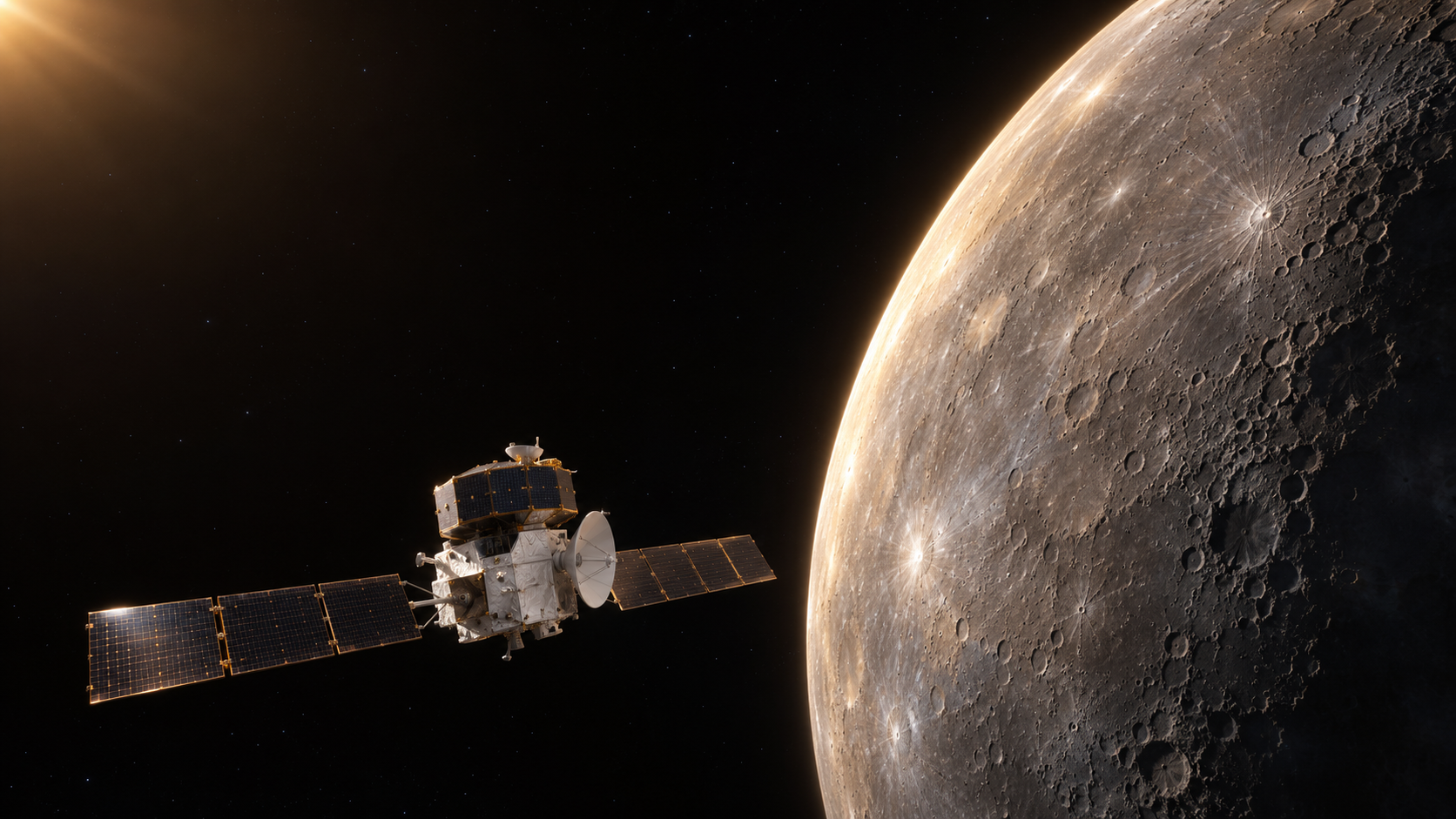 BepiColombo’s Eight-Year Journey to Mercury
-
 Could Known Particle Physics Explain Dark Energy?
-
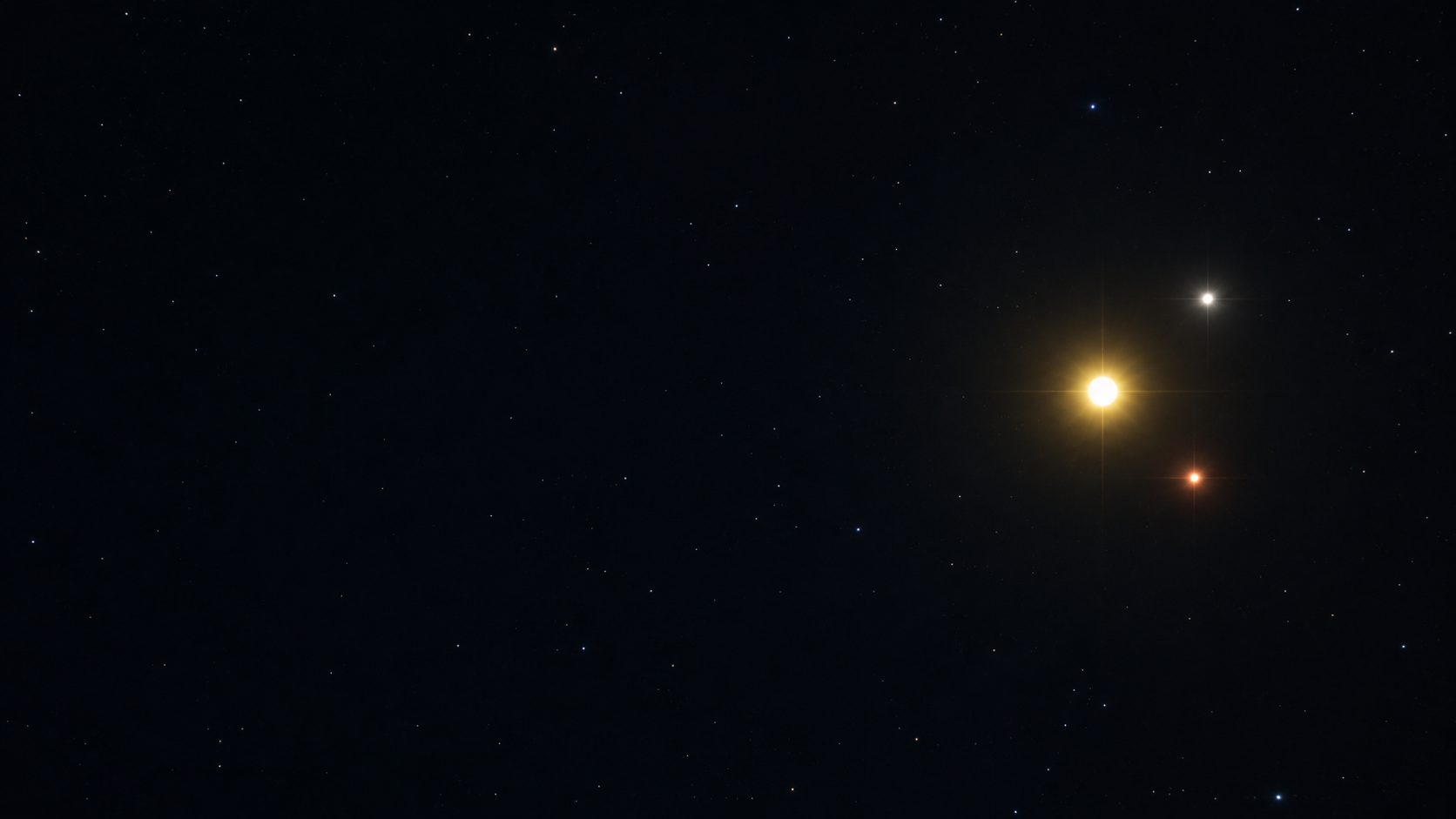 Nearby Triple-Star System That “Shouldn’t Exist” Explained
-
 How Science Can Prevent a Biological Apocalypse
-
 Voyager 1 Reaches One-Light-Day Milestone
-
 Star Eating Its Companion: What the Images Reveal
-
 Potatoes Grown in Simulated Moon Soil: Why It Matters
-
 BepiColombo’s Mercury Orbit Insertion Explained
-
 Leonid Meteor Shower 2026: How to Watch the Peak
-
 How Failed Supernovae May Create Black Holes
-
 Gravity Messaging: What the Elevator Experiment Shows
-
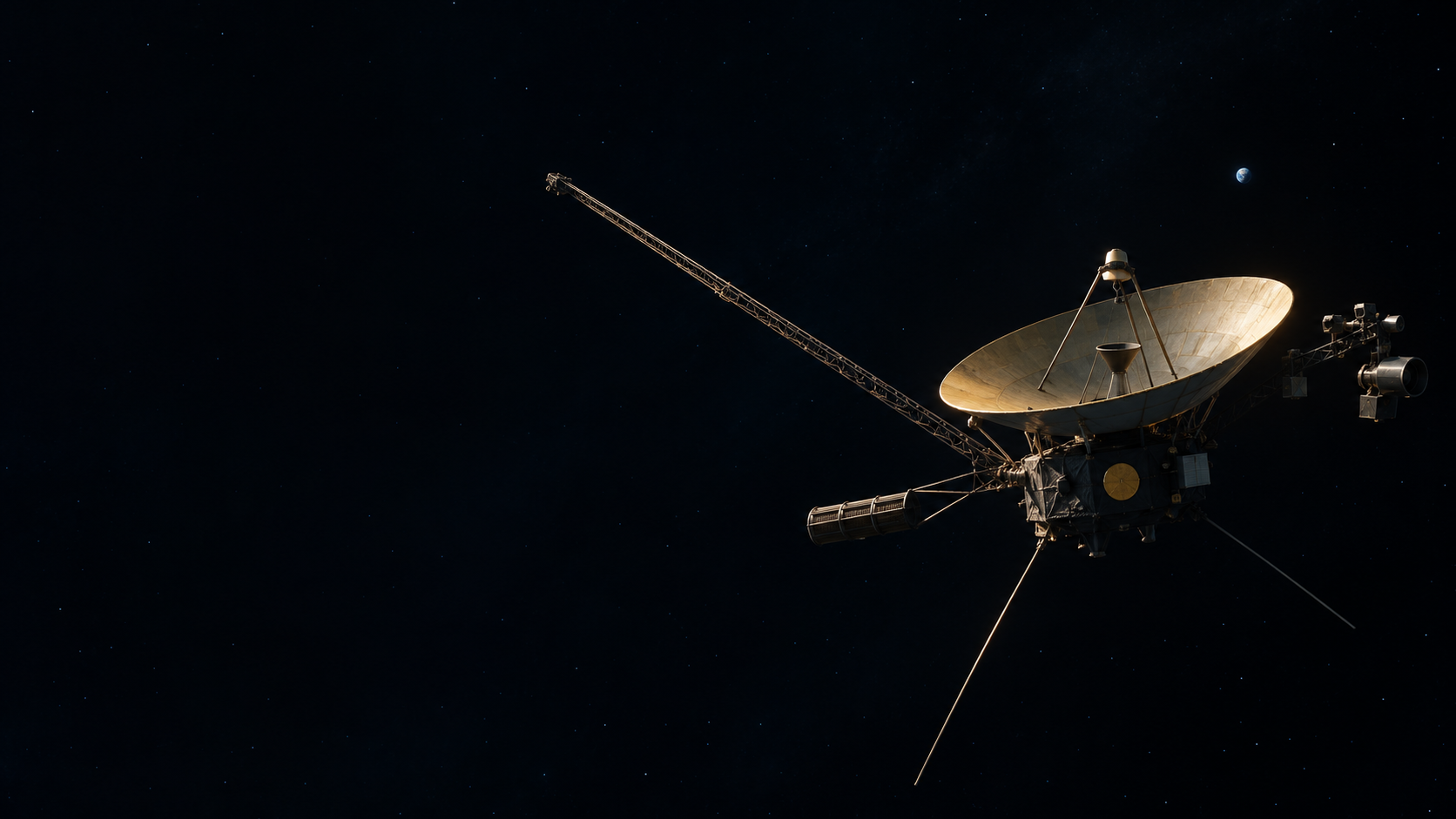 Voyager 1 Sends a Signal From One Light-Day Away
-
 What If Space and Time Are Not Fundamental?
-
 Why Potatoes Could Feed Future Moon Bases
-
 Hera’s First Close-Up Reveals a Strange Asteroid
-
 What’s Next for NASA’s Voyager 1 Probe?