Thanksgiving Travel Weather: Storms Threaten Both Coasts
Thanksgiving Travel Weather: Storms Threaten Both Coasts
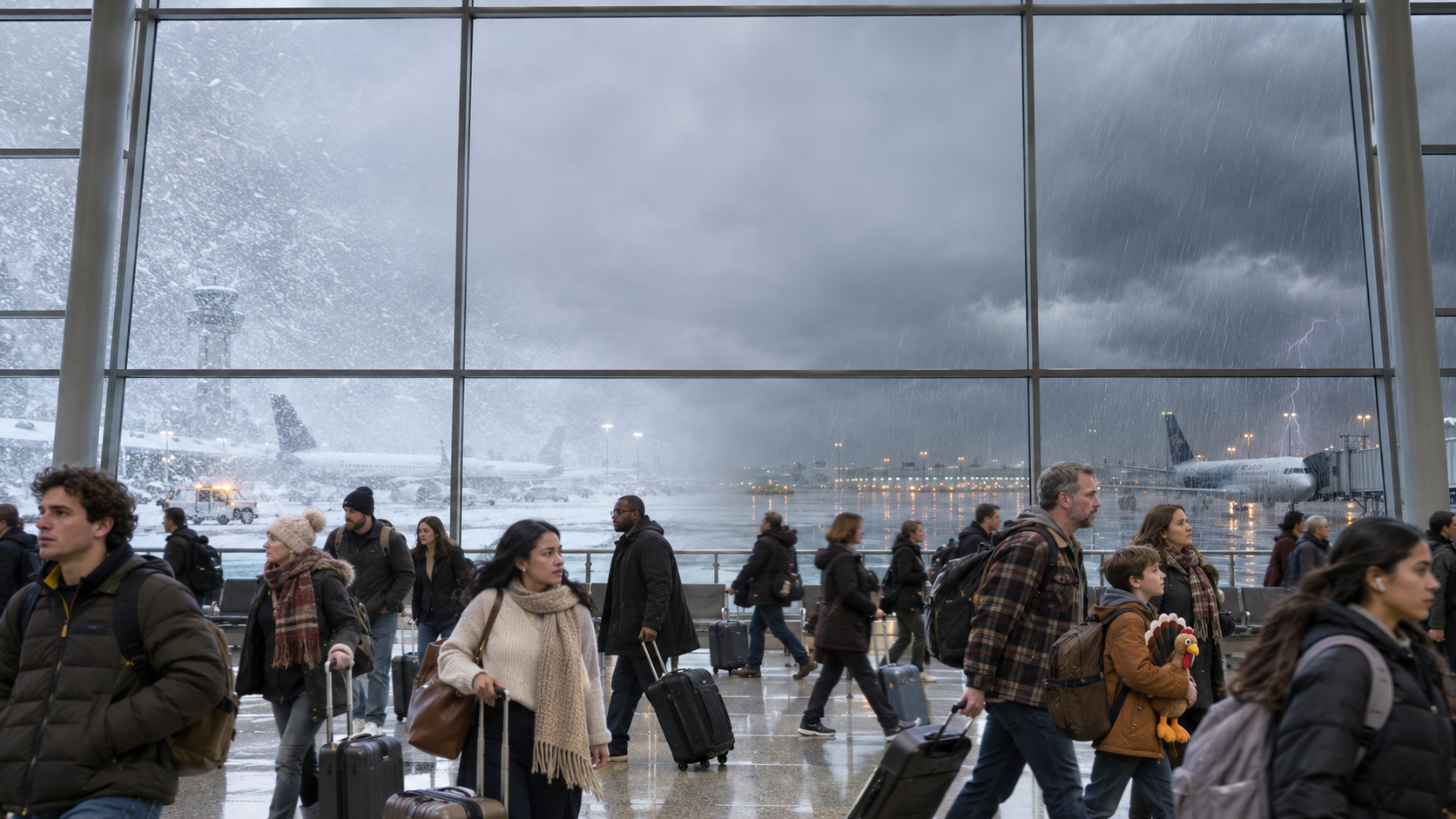
Thanksgiving travel could face significant disruptions as rough weather threatens parts of the East and West coasts. Forecast summaries point to storms, heavy rain, strong winds, and possible flooding during the holiday travel period. These conditions could affect flights, highways, trains, buses, ferries, bridges, and connecting transportation hubs.
Potential impacts include flight delays and cancellations, airport congestion, missed connections, slower highway travel, flooded roads, reduced visibility, and wind-related restrictions on exposed routes. A storm affecting one major airport can disrupt flights nationwide when aircraft, crews, and passengers are routed through that location.
Forecasts remain subject to change. Travelers should check the latest National Weather Service information, local emergency alerts, transportation updates, and carrier notifications before leaving home.
What Forecasts Say About Thanksgiving Travel
Storms Could Affect Both Coasts
Reports from NBC News and The Weather Channel describe the possibility of storm-related Thanksgiving travel problems along both coasts.
Simultaneous weather systems can cause wider complications than a single local storm. Flights may be delayed by conditions at the origin airport, destination airport, or a connecting hub. Road travelers may encounter changing conditions across multiple states, while rail and bus operators may face delays caused by flooding, wind damage, or infrastructure problems.
Available summaries do not provide a complete location-by-location forecast or establish exact snowfall totals, wind speeds, storm tracks, or airport-specific effects. Those details may change as forecasters receive more data.
New England Could See Rain and Strong Winds
A Thanksgiving storm could bring periods of rain and strong winds across New England, according to The Boston Globe.
Rain and wind can disrupt travel even without snow or blizzard conditions. Possible effects include:
- Reduced visibility for drivers and pilots
- Slower airport ground operations
- Delays on bridges and exposed roads
- Difficult conditions for high-profile vehicles
- Ferry cancellations or schedule changes
- Longer highway travel times
- Fallen branches or temporary power interruptions
Conditions may differ between coastal communities, inland areas, and higher elevations. Travelers should check forecasts for each city and county along their route.
New Hampshire Could See Heavy Rain and Flooding
An AOL.com report published November 23, 2026, warned that a coastal storm could bring heavy rain and flooding to New Hampshire over Thanksgiving weekend. Travelers should compare that report with the latest official forecast.
Heavy rain and flooding could affect low-lying roads, underpasses, rural routes, drainage-prone areas, and roads near rivers and streams. Floodwater can conceal damaged pavement, washouts, debris, and deep sections. Drivers should never cross moving water or ignore barricades.
Two Storm Systems Could Complicate Holiday Plans
Newsweek reported that two storms could threaten Thanksgiving travel. One system could affect a departure city while another reaches a destination or connecting airport later.
Travelers should check the forecast for the departure city, destination, full driving route, connecting airports, and all transportation operators.
How Severe Weather Could Affect Air Travel
Rain, strong winds, flooding, and reduced visibility can delay aircraft arrivals, restrict departures, alter runway configurations, and change routes. Other causes include ground stops, traffic-management restrictions, crew delays, weather-related maintenance, airport congestion, and deicing.
A delay can cause a missed connection. A cancellation may require rebooking when seats are limited during the busy Thanksgiving period. Travelers should monitor every airport on the itinerary, not only the origin and destination.
Before leaving for the airport:
- Check the airline app and official website.
- Confirm departure and arrival status.
- Review travel waivers and flexible rebooking policies.
- Save boarding passes and reservation details offline.
- Pack medication, identification, chargers, valuables, and essential supplies in carry-on luggage.
- Allow extra time for security, check-in, and customer-service lines.
- Confirm weather information through official sources.
Avoid scheduling an important event immediately after arrival because delays may continue after landing.
How Weather Could Affect Road and Rail Travel
Heavy rain reduces visibility, increases stopping distances, and can make lane markings difficult to see. Standing water can cause vehicles to lose traction, while flooding can close roads with little warning.
Before driving, check state transportation agencies, emergency alerts, route maps, and police or emergency-management notices. Identify alternate routes and safe stopping locations.
Drivers should:
- Slow down in heavy rain.
- Increase following distance.
- Use headlights when visibility is reduced.
- Avoid flooded roads and barricades.
- Never drive through moving water.
- Stop safely if conditions become dangerous.
Strong crosswinds can affect trucks, recreational vehicles, buses, and vehicles towing trailers. Exposed bridges, elevated roads, and coastal routes may face restrictions. Follow official instructions, reduce speed, and postpone travel when advised.
Rail and intercity bus services may be delayed by flooded tracks or roads, fallen branches, signal problems, power interruptions, and temporary speed restrictions. Check directly with the operator before departure, and carry food, water, medication, chargers, and extra phone power.
Regions Requiring Close Monitoring
The East Coast, New England, and New Hampshire are highlighted in the available summaries. The West Coast may also experience storm-related disruptions, although the summaries do not identify specific states, cities, or airports.
Travelers should monitor heavy rain, strong winds, urban or river flooding, mountain conditions, road closures, and airport disruptions. Coastal storms can also affect inland trips when itineraries connect through affected hubs.
Thanksgiving Travel Preparation Checklist
Before leaving home:
- Check the latest forecast and official travel advisories.
- Confirm flight, train, or bus status.
- Review change and cancellation policies.
- Charge phones and portable battery packs.
- Pack medication, identification, food, water, and weather-appropriate clothing.
- Share the itinerary with someone you trust.
- Build extra time into the schedule.
- Confirm that the destination remains accessible.
- Identify backup routes, lodging, and transportation.
Drivers should inspect tires, lights, windshield wipers, fluids, and emergency equipment. Carry water, snacks, medication, a charger, blankets, and extra layers. Turn around when water covers the road, and never drive around barricades.
Traveling earlier or later may reduce exposure to the worst conditions if the carrier permits changes. Flexible bookings and backup lodging can help if flooding or closures make the destination temporarily inaccessible.
What to Monitor During the Holiday Period
Monitor the National Weather Service and local offices for flood watches and warnings, high-wind advisories, coastal flood alerts, winter weather advisories, evacuation notices, and emergency-management instructions.
A watch means hazardous conditions are possible. A warning means hazardous conditions are occurring or imminent. Follow local instructions when warnings are issued.
Check airlines, airports, rail operators, bus companies, ferry operators, and state transportation agencies for closures, restrictions, and service suspensions. Treat official carrier notifications as the primary source for booking decisions.
Social media may provide useful observations, but confirm closures, warnings, and evacuation orders through official sources.
How to Interpret Changing Forecasts
Storm tracks, timing, rainfall, wind strength, and flood potential can change as an event approaches. An early projection describes risk, not a guaranteed outcome.
Check updated forecasts at least twice daily during uncertain periods and again immediately before departure. Search by departure location, destination, connection point, driving route, and planned travel time.
Practical preparation reduces stress without requiring immediate cancellation. Keep a backup plan, allow additional time, and continue monitoring official updates.
Key Takeaways
- Rough weather may affect travel along both coasts.
- New England could experience rain and strong winds.
- New Hampshire may face heavy rain and flooding over Thanksgiving weekend.
- Two storm systems could cause disruptions at different times and locations.
- Air, road, rail, bus, and ferry travelers should monitor the entire itinerary.
- Flexible plans, extra time, carry-on essentials, and official alerts can reduce the impact of delays.
- Final decisions should rely on the latest official weather and transportation information.
Frequently Asked Questions
Is Thanksgiving travel expected to be disrupted by weather?
Potential disruptions are possible because storms and rough weather may affect both coasts. Travelers could face delays, cancellations, road closures, flooding, strong winds, and transportation backlogs. Conditions remain subject to change.
Which areas face the greatest concerns?
The available reports identify the East Coast, New England, and New Hampshire as areas requiring close monitoring. NBC News and The Weather Channel also indicate possible impacts along the West Coast. Local forecasts provide more useful information than regional headlines.
Could heavy rain and flooding affect New Hampshire?
Yes. An AOL.com report warned of heavy rain and flooding in New Hampshire over Thanksgiving weekend. Flooding may affect low-lying roads, underpasses, and routes near waterways. Never attempt to cross floodwater.
What should air travelers do if storms threaten a flight?
Check the airline app and airport board before leaving home. Review waivers and rebooking options, keep essential items in carry-on luggage, and allow extra time. Monitor every airport on the itinerary.
How can drivers prepare?
Check the full route, inspect the vehicle, carry food, water, medication, chargers, and extra layers, and allow additional time. Reduce speed in heavy rain, increase following distance, and turn around when roads are flooded or officials advise against travel.
When should travelers check the forecast?
Check before making booking decisions, again the day before departure, and immediately before leaving. Continue monitoring official alerts because storm timing and transportation impacts can change quickly.
Related Articles
-
 Ukraine Confirms Naval Drone Strike Near Libya
-
 Don Toliver U.K. Concert Evacuated After Substance Report
-
 COP31 Collapse: What Happens After the Climate Talks?
-
 Tajikistan Has Not Withdrawn From the ICC
-
 The Bloc Wants Power. Can It Govern Effectively?
-
 NATO Warns Russia May Launch Nuclear-Armed Satellite
-
 Iran Warns of ‘All Means’ Against Reported U.S. Blockade
-
 Russian Ship Sparta II Leaves Finnish Waters After Drone Strike
-
 COP31 Talks Collapse Over Fossil Fuel Dispute
-
 Zelenskyy’s Libya Warship Strike Claim Remains Unverified
-
 What Kim Jong Un’s Envoy Welcome Signals
-
 Thanksgiving Travel Threatened by Two Major Storms
-
 How Disasters Complicate Medicaid Work Requirements
-
 Bay Area Prepares for Flooding Near SFO
-
 Army’s Iowa Lead Explosive Detonation Raises Permit Questions
-
 COP31 Climate Talks End Without Agreement