Army’s Iowa Lead Explosive Detonation Raises Permit Questions
Army’s Iowa Lead Explosive Detonation Raises Permit Questions
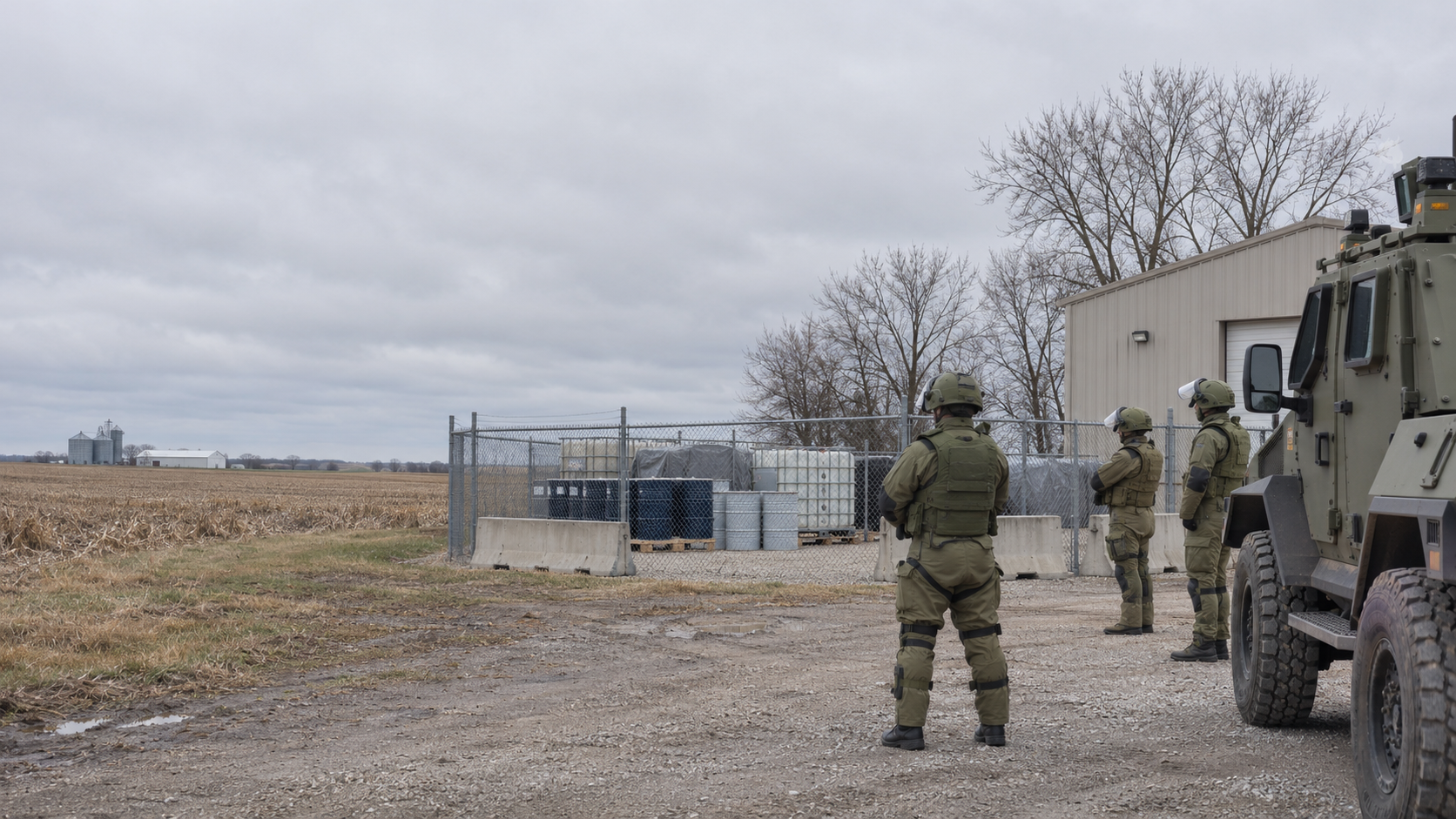
The U.S. Army is reportedly preparing to detonate lead-based explosives in Iowa without first obtaining an EPA permit. The plan has prompted concern from environmental groups and raised questions about federal oversight, public notice, contamination risks, and cleanup responsibilities.
Reports variously identify the material as lead azide, lead explosives, or toxic explosives. One report says the quantity could reach five tons, while another says the Army could proceed “by Tuesday.” The available summaries do not establish the exact location, date, Army unit, chemical composition, or legal basis for the operation.
That uncertainty matters. Lead azide presents an immediate explosive hazard and a potential long-term contamination risk. Whether the Army must obtain an EPA permit depends on the activity, the material’s legal classification, the disposal method, and the environmental regulations that apply.
What the Army Is Reportedly Planning
Several reports describe a planned U.S. Army detonation in Iowa. The Des Moines Register identifies the material as lead azide, while other reports use broader terms such as lead explosives or toxic explosives Source 1.
NewsNation reported that the Army planned to detonate five tons of lead explosives in Iowa despite a pause involving the relevant permit Source 9. The summary supports the five-ton figure but does not confirm that all five tons consist specifically of lead azide.
Lead azide is a specific chemical compound. “Lead explosives” may refer more broadly to lead-containing explosive materials. Until Army or regulatory documents identify the composition, those descriptions should not be treated as interchangeable.
The Permit Dispute
Iowa Public Radio reported that the Army planned to detonate toxic explosives without obtaining an EPA permit, potentially as soon as Tuesday Source 7.
The available information does not show whether the permit was denied, paused, challenged, still under review, replaced by another authorization, or deemed unnecessary by the Army. Those distinctions have legal significance. A paused permit is not the same as a final denial, and the Army’s position does not by itself establish that its interpretation complies with federal law.
The exact site, county, and detonation date also remain unclear. The “by Tuesday” reference should be checked against the original publication date and subsequent Army, EPA, state, and local notices.
Before the operation occurs, the public should receive information about the site, timing, chemical composition, quantity, exclusion zone, nearby homes and waterways, weather restrictions, air monitoring, post-detonation sampling, and cleanup responsibility.
What Is Lead Azide?
Lead azide is a lead-containing explosive compound used primarily as an initiating explosive or detonator component. It presents two principal risks.
First, it is sensitive to heat, impact, friction, static electricity, and improper handling. Storage, transport, preparation, and disposal therefore require specialized procedures.
Second, it contains lead. Lead does not become harmless after an explosion. Residues may remain in soil, dust, debris, or sediment, depending on the detonation method and site conditions.
The presence of lead does not prove that nearby communities will be contaminated. Risk depends on the quantity, containment, weather, soil, distance from populated areas, and effectiveness of monitoring and cleanup.
Why Lead Contamination Matters
Lead can persist in the environment for long periods. It may attach to soil particles, accumulate in sediment, or become airborne as dust. Potential exposure pathways include:
- Inhaling contaminated dust;
- Ingesting contaminated soil;
- Drinking affected groundwater or surface water;
- Contact with contaminated debris; and
- Tracking particles from the site into homes or vehicles.
The Centers for Disease Control and Prevention states that no safe blood lead level in children has been identified and that lead exposure can affect learning, behavior, and development Source 2.
Children, pregnant people, developing fetuses, and workers handling contaminated materials may face heightened concern. However, exposure beyond the controlled area cannot be determined without site-specific monitoring and modeling.
Why an EPA Permit Matters
Environmental permits may regulate hazardous-waste management, air emissions, water discharges, treatment processes, and waste storage. The applicable authorization depends on how regulators classify the activity and material.
A detonation may raise questions about whether the operation constitutes:
- Treatment or disposal of hazardous waste;
- An air-emission activity;
- Open burning or open detonation;
- Management of explosive residues;
- A discharge affecting surface water; or
- An activity covered by a federal or military exemption.
The Army may believe that an exemption applies, that another authorization governs the operation, or that the detonation does not require the disputed permit. The available summaries do not identify its precise legal argument.
Important records would include the permit application, EPA correspondence, Army legal memoranda, environmental assessments, and Iowa regulatory filings. Regulators should clarify which permit is disputed, which laws apply, whether the EPA has objected, whether Iowa requires separate authorization, and what monitoring and cleanup conditions will govern the operation.
Environmental and Public-Health Concerns
An explosion can produce smoke, dust, combustion products, and residual particles. The quantity and composition depend on the material, detonation design, soil disturbance, containment, and weather.
A credible monitoring plan should identify sampling locations, pollutants and metals measured, sampling times, detection limits, quality-control procedures, public access to results, and required responses if readings exceed applicable standards.
Baseline sampling should occur before the event. Post-detonation testing should examine soil, debris, sediment, surface water, and groundwater where relevant. The plan should also address private wells, streams, wetlands, farms, wildlife habitat, schools, homes, and livestock areas.
Explosive safety is a separate concern. Residents need clear information about exclusion zones, road closures, evacuation or shelter instructions, emergency contacts, fire response, weather-related postponements, and restrictions on entering the site afterward. The Army should explain how it will identify and remove unexploded material and contaminated debris.
Why Environmental Groups Oppose the Plan
Iowa Capital Dispatch reported that environmental groups renewed calls to halt the planned lead azide detonation Source 5.
Based on the reported dispute, objections center on proceeding while the permit issue remains unresolved, possible lead pollution, limited public notice, insufficient independent review, and uncertainty about monitoring and cleanup. Specific organizations and statements should be confirmed through original articles and official releases. Opposition does not establish that contamination will occur.
What Is Known and Unknown
The supplied reporting indicates that the Army is reportedly planning a detonation in Iowa; reports describe the material as lead azide, lead explosives, or toxic explosives; one report gives a possible quantity of five tons; the Army reportedly plans to proceed without an EPA permit; and environmental groups have called for the plan to be halted.
Still requiring confirmation are the exact location, chemical composition, quantity, date, responsible Army unit, purpose, EPA position, Iowa Department of Natural Resources involvement, environmental assessment findings, safety procedures, monitoring plan, cleanup obligations, and any court or regulatory order.
The supplied links are Google News RSS URLs rather than direct publisher pages. They should be replaced with original articles and official documents before publication. The reported November 22, 2026 publication date for the Iowa Capital Dispatch article should also be verified because it affects the chronology.
What Officials and Residents Should Clarify
The Army should explain why it considers an EPA permit unnecessary, identify the material and quantity, state where and when the operation will occur, describe the safety perimeter and monitoring program, explain how debris will be managed, and identify who will pay for cleanup and long-term testing.
The EPA and Iowa regulators should disclose whether an application was filed, why the permit was paused, which rules apply, whether the operation can be delayed, and whether assessments, correspondence, permits, and monitoring data will be released.
Nearby communities should receive direct notice, public-meeting information, emergency instructions, and procedures for requesting testing or reporting concerns.
Conclusion
The reported Iowa plan raises a fundamental question about military environmental oversight: Can the Army detonate a large quantity of lead-based explosive while proceeding without the EPA permit that environmental groups say remains unresolved?
The answer depends on the material, disposal method, site, and governing regulations. Current reporting does not establish that the detonation will cause off-site contamination, nor does it resolve whether the Army’s permit interpretation is legally correct.
Before any detonation, the public should receive the location, timing, material description, safety procedures, monitoring plan, legal basis, and cleanup commitments. Independent regulatory review and transparent environmental testing would allow residents to assess the risks using evidence rather than conflicting descriptions.
Frequently Asked Questions
What is the Army planning to detonate in Iowa?
Reports describe lead azide, lead explosives, or toxic explosives. One report says the quantity could be five tons. The exact composition and quantity require confirmation through Army or regulatory records.
Why does the EPA permit matter?
An EPA permit may regulate hazardous-waste handling, emissions, water discharges, or related environmental impacts. Whether one is required depends on the activity and applicable regulations.
Is lead azide dangerous?
Yes. Lead azide presents both an explosive hazard and a lead-toxicity hazard. Potential environmental effects depend on handling, location, weather, containment, monitoring, and cleanup.
Where and when will the detonation occur?
The supplied summaries do not identify a confirmed location or date. Current information should come from the Army, EPA, Iowa Department of Natural Resources, local government, or original reporting.
Have environmental groups opposed the plan?
Yes. Iowa Capital Dispatch reported renewed calls from environmental groups to halt the detonation. Their specific identities and statements should be confirmed through the original reporting.
Related Articles
-
 Russian Ship Sparta II Leaves Finnish Waters After Drone Strike
-
 COP31 Talks Collapse Over Fossil Fuel Dispute
-
 Zelenskyy’s Libya Warship Strike Claim Remains Unverified
-
 What Kim Jong Un’s Envoy Welcome Signals
-
 Thanksgiving Travel Threatened by Two Major Storms
-
 How Disasters Complicate Medicaid Work Requirements
-
 Bay Area Prepares for Flooding Near SFO
-
 COP31 Climate Talks End Without Agreement
-
 Suspected Drone Attack Hits Russian Ship Near Benghazi
-
 Ukraine Threatens Russia’s Crimea Supply Lifeline
-
 Genocide Rulings: Legal Significance and Global Impact
-
 Army Delays Planned Detonation of Chemicals in Iowa
-
 Democrats Reportedly Win Largest House Majority Since 1992
-
 ICE Airport Detention Video Sparks Seattle Protests
-
 Chicago Park Rat Infestation: What the Evidence Shows
-
 COP31: Six Key Takeaways on Climate Action