How to See the Mars–Jupiter Conjunction Monday
How to See the Mars–Jupiter Conjunction Monday
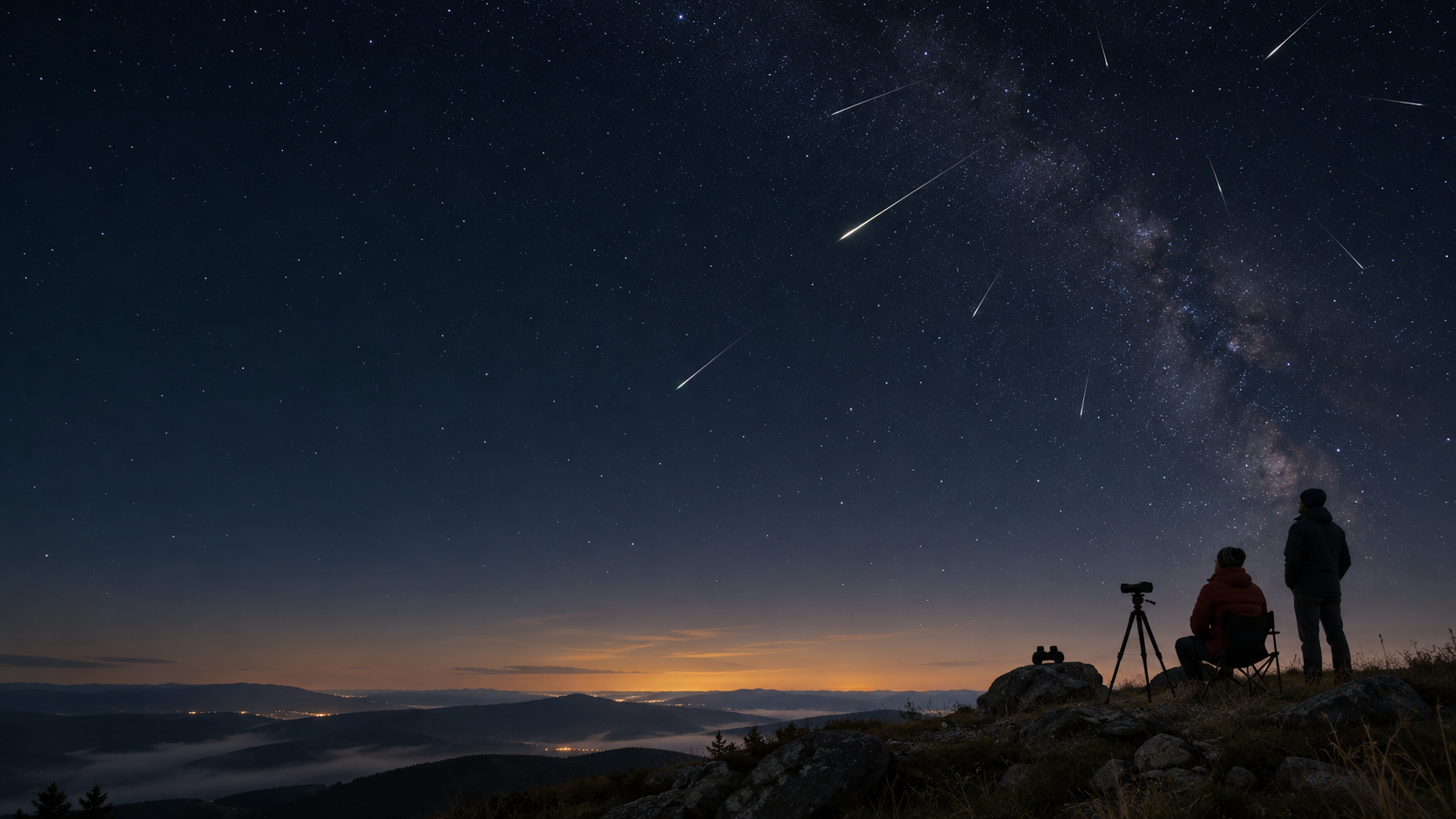
Mars and Jupiter will appear unusually close in Monday’s pre-dawn sky, creating an eye-catching conjunction for observers with a clear view of the eastern horizon. The planets will look almost side by side, although they remain separated by an enormous distance in space.
Reports identify the event as occurring on Monday, November 16, with the closest apparent approach calculated for 9:04 p.m. Eastern Time on Sunday. The year should be confirmed before planning a viewing session because the supplied reports do not identify it. For observers in the United States, the best opportunity should come the following morning, before sunrise, when the planets rise above the horizon. Source 1
The conjunction should be visible without a telescope under suitable conditions. Jupiter will be the brighter object, while Mars may show a subtle reddish-orange tint. A dark location helps, but the planets should remain visible from many suburban areas if clouds, haze, buildings, trees, and hills do not block the low eastern sky.
What Is Happening Between Mars and Jupiter?
A planetary conjunction occurs when two celestial objects appear close together in the sky from Earth’s perspective. During this event, Mars and Jupiter will seem to occupy nearly the same area of the morning sky.
The planets are not moving toward a collision, and they will not physically meet. Their apparent closeness results from their different orbital paths around the Sun. As Earth, Mars, and Jupiter move through space, their positions can align from our viewpoint. That alignment makes them appear close even though their actual separation remains vast.
Astronomers describe the gap between sky objects using angular distance. This is the apparent separation across the sky, not the physical distance between the objects. Mars is much nearer to Earth than Jupiter, but perspective compresses the apparent distance between them.
The event is safe to observe with the unaided eye. The main hazard involves using binoculars or a telescope carelessly near sunrise. Never point optical equipment at the Sun.
Conjunction Versus Planetary Parade
A “planetary parade” is a popular term for several planets appearing along or near the ecliptic, the broad path followed by the Sun, Moon, and planets across the sky. Other planets or bright stars may also be visible during November’s morning display, depending on the date and location. Source 7
This event focuses on Mars and Jupiter. Other planets will not necessarily appear equally close, equally bright, or visible from every location.
When to See Mars and Jupiter
The Closest Approach Is Sunday Evening
The reported closest point occurs at 9:04 p.m. Eastern Time on Sunday. This is the moment of greatest apparent alignment, not necessarily the best viewing time for every observer.
For viewers in the United States, Mars and Jupiter are expected to be below the horizon at that time. The most useful opportunity should come during the following pre-dawn hours, when the pair remains visually close enough to observe.
A conjunction’s calculated peak can occur during daylight, below the horizon, or during unsuitable weather. Plan around local visibility rather than treating the exact peak time as a universal viewing appointment.
The Best Viewing Window Is Before Sunrise
The final hour before local sunrise should provide the best balance between planetary altitude and dark sky. The planets need to rise above the eastern horizon, but waiting too long allows twilight to reduce contrast.
- Confirm the Monday date and year for the event.
- Check the local sunrise time.
- Go outside at least 30 minutes before sunrise.
- Face east or southeast, depending on your location.
- Find Jupiter while the sky remains relatively dark.
- Look for the dimmer, reddish Mars nearby.
- Stop using optical equipment before the Sun rises into the viewing area.
A local sunrise calculator, astronomy website, or planetarium app can provide more accurate times for a specific address. Do not rely on one clock time for every city.
Visibility varies with latitude, longitude, daylight-saving rules, weather, and terrain. Reports describe the event as visible across suitable regions, including the United States and South Jersey. Source 5
Before leaving home, verify the local sunrise time, cloud and fog conditions, planetary altitude, and visibility near the eastern horizon.
Where to Look
Choose an open location with an unobstructed eastern or southeastern horizon. The planets may appear relatively low, so a clear line of sight matters more than finding the darkest possible site.
Good locations include open fields, beaches, parks, permitted rural roadside areas, and elevated viewpoints. Avoid tall buildings and dense trees. Scout the location during daylight so hazards and obstructions are easy to identify.
Find Jupiter First
Jupiter should be the easiest object to identify. It will appear as a bright, steady point of light, often brighter than nearby stars. Once you find it, search nearby for Mars.
Planets often twinkle less than stars because they present small visible disks rather than single points of light. Atmospheric turbulence can still make them shimmer, especially when they are low above the horizon.
Identify Mars
Mars may appear reddish-orange, although the color can be subtle. Haze, moonlight, light pollution, and low altitude can reduce the visible tint. Jupiter will be brighter, while Mars will generally look dimmer and warmer in color.
If identification is uncertain, compare the view with a star chart or astronomy app set to the correct location, date, and time. Reduce phone brightness before looking up because a bright screen can temporarily impair dark adaptation.
What the Planets Will Look Like
Jupiter should be the dominant member of the pair, resembling an unusually bright star to the unaided eye. Mars may appear smaller and reddish. Their contrasting colors and brightness make the conjunction easy to recognize.
Do not expect Mars to look like a large glowing red disk without optical equipment. Atmospheric haze can weaken its color, and Jupiter’s brightness may initially draw most of the attention.
The planets will not literally touch. “Almost touch” describes their appearance in the sky. Their angular separation will be small, but they will remain extremely far apart in three-dimensional space. Nothing unusual will happen to the planets, and the conjunction poses no danger to Earth.
Equipment and Safety
No special equipment is required. Binoculars can provide a wider, more comfortable view, while a small telescope may reveal Jupiter’s disk, cloud bands, and four largest moons under favorable conditions. Mars will appear as a small reddish disk, although surface detail may be difficult to detect.
A tripod can steady binoculars. Warm clothing, a chair, a red flashlight, and a phone or printed sky chart can also improve the experience. Give your eyes 10 to 20 minutes to adapt when possible, and avoid repeatedly checking a bright screen.
Use binoculars or a telescope only while the Sun is below the horizon and outside the viewing area. Never point optical equipment toward the Sun. Magnified sunlight can cause permanent eye damage, even during a brief glance.
Photography Tips
The conjunction offers a simple photography opportunity. Try composing the planets above a tree line, skyline, beach, field, or body of water. A tripod helps keep the image steady. Use manual focus if available, and adjust exposure as the sky brightens.
A phone may record the planets as small dots. Including a recognizable landscape can make the image more meaningful. Do not expect a phone to reproduce the visual scale seen through binoculars.
Common Mistakes to Avoid
- Looking at the wrong time: Waiting until after sunrise can make the planets harder to see. The reported closest approach at 9:04 p.m. ET on Sunday is also not the best U.S. viewing time because the pair is below the horizon. Source 9
- Choosing a blocked horizon: Trees, buildings, and hills can hide low-altitude planets.
- Confusing a planet with a star: Jupiter is brighter, and Mars may appear redder. Use a sky map if necessary.
- Using optical equipment near sunrise: Stop before the Sun can enter the field of view.
Quick Viewing Checklist
- Confirm the correct Monday and year.
- Check local sunrise time.
- Review the hourly cloud forecast.
- Choose an unobstructed eastern horizon.
- Arrive about 30 minutes before sunrise.
- Find bright Jupiter first.
- Look for reddish Mars nearby.
- Use a sky map if necessary.
- Bring binoculars only if desired.
- Never point optical equipment at the Sun.
Conclusion
The Mars–Jupiter conjunction will create a close apparent pairing before sunrise. The planets will not physically touch, but they should look unusually close from Earth, with bright Jupiter serving as a guide to dimmer, reddish Mars.
For many U.S. observers, the best opportunity comes Monday morning rather than at the Sunday evening closest approach. Confirm the event year, check local conditions, find a clear eastern horizon, and look during the final hour before sunrise. No telescope is required, although binoculars can provide a wider view while the Sun remains safely below the horizon.
FAQ
What time should I see Mars and Jupiter on Monday morning?
Look during the final hour before local sunrise, when the planets are above the eastern horizon and the sky remains relatively dark. Use a local sunrise calculator or astronomy app for precise timing.
Will Mars and Jupiter really touch?
No. They will only appear close together from Earth’s perspective. The planets remain separated by an enormous distance in space.
Can I see the conjunction without a telescope?
Yes. Both planets should be visible without optical equipment under clear conditions. Jupiter should be brighter, while Mars may show a subtle reddish color.
Where should I look?
Face east or southeast before sunrise. Choose a location with a clear, low horizon and use bright Jupiter as the anchor point for locating Mars.
Is the Sunday evening closest approach visible in the United States?
The reported closest point occurs at 9:04 p.m. ET on Sunday, when Mars and Jupiter are below the U.S. horizon. U.S. observers should look before sunrise on Monday instead.
Is it safe to use binoculars or a telescope?
Yes, while the sky remains dark and the Sun is below the horizon. Never point binoculars or a telescope toward the Sun because magnified sunlight can cause permanent eye damage.