Bay Area Flood Threat: Airport and Travel Safety Guide
Bay Area Flood Threat: Airport and Travel Safety Guide
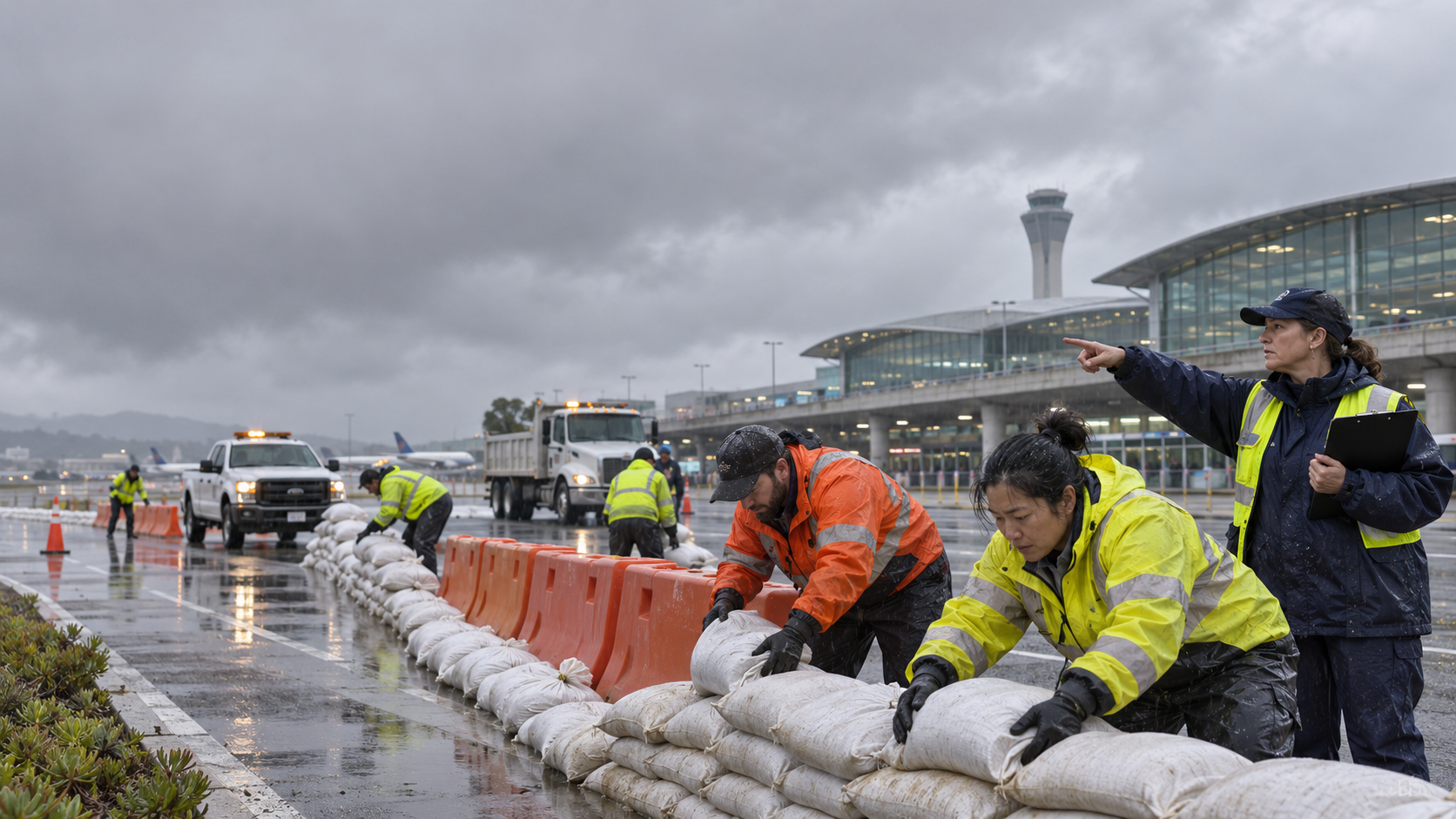
Bay Area airports and coastal communities face a serious flood threat as unusually high king tides combine with storm conditions. Officials have urged residents to avoid unnecessary travel, while travelers should check flight, road, transit, weather, and emergency updates before leaving home.
The risk includes San Francisco International Airport (SFO), other regional airports, coastal roads, low-lying neighborhoods, and transportation routes connecting the shoreline with inland communities. A flight can remain scheduled even when the road to the airport is flooded, congested, or unsafe.
Update note: Conditions can change quickly. The reports summarized here do not confirm blanket airport closures, exact flood depths, specific road closures, evacuation zones, or individual flight cancellations. Verify current information through official airport, airline, transportation, weather, and emergency-management channels.
What Is Causing the Flood Threat?
High King Tides
King tides are exceptionally high natural tides caused by the combined gravitational effects of the moon and sun. They reduce the space available for stormwater drainage. When tide levels are elevated, rainwater may drain more slowly into bays, estuaries, and the ocean.
Wind can push water farther inland, increasing the risk along shorelines and low-lying roads. Coastal flooding may begin before the most intense part of a storm arrives.
One report quoted a mayor warning California residents to prepare for “never-before-seen” king tides. That phrase reflects the reported warning, not an independently verified scientific measurement. Source 3
Storm Conditions
Storms can intensify tidal flooding through:
- Heavy rain that overwhelms drainage systems.
- Strong winds that push water toward shorelines.
- Waves that overtop seawalls and waterfront structures.
- Saturated ground that increases runoff.
- Reduced drainage that leaves water on roads longer.
Flooding will not affect every neighborhood equally. A coastal street may become impassable while a nearby inland route remains open. Airport approach roads, underpasses, bridges, parking areas, and waterfront highways may face different hazards at the same time.
Inland Transportation Effects
Flood impacts can extend inland through connected transportation corridors. Water-covered roads may cause congestion, detours, public transit delays, rideshare shortages, and delayed airport shuttles.
A road closure in one low-lying area can overwhelm alternate routes and cause long delays even where no flooding is visible. Travelers may also have difficulty reaching rental-car offices, hotels, parking facilities, or transit stations.
The key distinction is between airport operations and airport access. An airport may remain open while surrounding roads are hazardous. A flight may remain scheduled while the trip to the terminal becomes unsafe or severely delayed.
How Airports and Travel Could Be Affected
SFO is specifically identified in reports describing the Bay Area flood threat. Other regional airports may also face weather-related or transportation-related disruption. Source 7
Flooding does not have to close a terminal to disrupt travel. Possible effects include:
- Delayed arrivals and departures.
- Weather-related cancellations.
- Aircraft, gate, or baggage-handling changes.
- Longer security lines.
- Missed connections.
- Reduced access to parking and ground transportation.
- Delayed shuttles.
- Rideshare and taxi shortages.
Check both flight status and the route to the airport. Checking only one can create a dangerous or costly mistake.
What Travelers Should Do
Before Leaving Home
- Check the airline’s official website or app for delays, cancellations, waivers, rebooking options, and connection changes.
- Check airport advisories, road conditions, public transit alerts, weather warnings, and local emergency-management updates.
- Confirm that airport approach roads, bridges, underpasses, parking areas, and transit routes remain usable.
- Check again immediately before departure and during the journey.
- Keep identification, medications, chargers, documents, water, food, and essential clothing in carry-on luggage.
Do not travel to the airport solely because the original departure time remains unchanged. A travel waiver may apply only to specific dates, routes, or fare types, so review the airline’s terms before purchasing a replacement ticket.
If You Are Already at the Airport
Follow terminal announcements, airport staff directions, and airline instructions. Keep phones and backup batteries charged, and monitor changes to gates, boarding times, baggage procedures, connections, and ground transportation.
Do not leave the terminal to investigate flooding. Ask airline representatives about rebooking before buying a separate ticket independently.
After landing, check local road, transit, and weather conditions before accepting a ride or renting a vehicle. An operating flight does not guarantee that the destination is accessible.
Why Officials Advise Against Unnecessary Travel
Avoiding nonessential travel reduces the risk of crashes, stalled vehicles, emergency rescues, and traffic gridlock. It also helps emergency crews reach affected areas.
The warning applies to recreational trips, sightseeing, nonessential airport journeys, and other travel that can be postponed. Essential travel should be planned around official instructions and current road conditions.
Reports say Bay Area officials urged residents to avoid unnecessary travel as high tides and a storm threatened transportation and coastal areas. Source 9
Stay away from beaches, piers, seawalls, breakwaters, waterfront roads, and other exposed areas during storm conditions. Follow closures and evacuation instructions. Do not cross barricades to photograph flooding or inspect damage.
Flood Safety for Drivers
Never drive through floodwater. Water depth can be difficult to judge, and the road beneath it may be damaged or washed out. Floodwater can conceal debris, carry vehicles, or expose drivers to downed power lines.
Turn around and use an official detour. Do not move barricades or drive around road closures. If water enters a vehicle, prioritize personal safety, avoid moving water on foot, call emergency services when immediate danger exists, and follow local instructions.
Preparation for Coastal Residents
Move vehicles, electronics, documents, valuables, and other essential property away from low-lying areas. Protect basement entrances, garages, and ground-floor openings where appropriate. Secure outdoor furniture and loose objects, keep pets indoors, and prepare to transport them if evacuation becomes necessary.
An emergency kit should include:
- Drinking water.
- Nonperishable food.
- Flashlights and batteries.
- First-aid supplies.
- Medications.
- Phone chargers.
- Copies of important documents.
- Basic clothing.
- Pet supplies, where needed.
Plan for power outages and transportation disruptions. Make arrangements for people who need mobility, medical, or communication assistance. Leave promptly if officials issue an evacuation order, use designated routes, and do not return until authorities confirm that the area is safe.
What the Reports Confirm
The provided reports support these broad conclusions:
- Bay Area airports face a severe or extreme flood threat.
- SFO is specifically identified as being at risk.
- Coastal areas may experience unusually high king tides.
- Storm conditions may increase flooding and transportation hazards.
- Officials have urged residents to avoid unnecessary travel.
- Thanksgiving travel could face delays and disruption.
SFGATE reported that extreme flooding could disrupt Thanksgiving travel across the Bay Area and advised travelers to monitor conditions. Source 5
The reports do not establish whether an airport is closed, which flights are canceled, exact flood depths, the precise timing of the highest tides, affected roads, evacuation zones, transit conditions, waiver eligibility, or the duration of disruption. Check official sources before acting on these details.
Thanksgiving and Holiday Travel
Holiday demand increases pressure on flights, rental cars, hotels, rideshare services, and highways. Even moderate delays can create larger downstream effects.
Build flexibility into travel plans, avoid tight connections where possible, and consider alternative lodging or transportation. Share travel plans with someone outside the affected area, especially when traveling through a flood-prone region.
Where to Find Reliable Updates
Use official airport websites and accounts, airline apps and websites, local emergency-management pages, transportation-agency notices, road-closure updates, evacuation orders, shelter guidance, and current weather or flood alerts.
Treat third-party reports as leads that require confirmation. Prioritize updates with a publication time, named agency, specific location, clear instructions, and an official contact or webpage. Avoid sharing unverified claims about airport closures, deaths, evacuations, or flood conditions.
Conclusion
Extreme king tides combined with storm conditions may create dangerous flooding across coastal and low-lying parts of the Bay Area. SFO and other airports may experience delays or access problems even if they remain open.
Residents should avoid unnecessary travel when officials issue that guidance. Travelers should verify flights, roads, public transit, and airport access before leaving home. Never drive through floodwater, and follow barricades, evacuation orders, airport instructions, and emergency guidance from local authorities.
Frequently Asked Questions
Are Bay Area airports closed because of the flood threat?
The reports describe a severe flood threat affecting SFO and other Bay Area airports but do not confirm blanket closures. Check the relevant airport and airline directly.
Should I avoid traveling to SFO?
Officials have urged residents to avoid unnecessary travel because flooding, high tides, storms, and road disruptions may create dangerous conditions. If travel is essential, confirm the flight, check the route, and review emergency updates before departing.
Can my flight operate if flooding affects the Bay Area?
Yes. An airport may continue operating while surrounding roads, public transit, or access routes face delays or closures. Check both flight status and ground transportation conditions.
What are king tides?
King tides are unusually high natural tides caused by the combined positions and gravitational effects of the moon and sun. They reduce drainage capacity and can worsen coastal flooding when combined with rain, wind, waves, or storms.
What should I do if my route to the airport is flooded?
Do not drive through floodwater or bypass barriers. Turn around, follow official detours, and contact the airline about rebooking if reaching the airport is unsafe.
Where can I find the latest information?
Use official airport and airline channels, local emergency-management agencies, transportation authorities, and current weather or flood alerts. Check the update time, location, and issuing agency before relying on any report.
Related Articles
-
 Russian Ship Sparta II Leaves Finnish Waters After Drone Strike
-
 COP31 Talks Collapse Over Fossil Fuel Dispute
-
 Zelenskyy’s Libya Warship Strike Claim Remains Unverified
-
 What Kim Jong Un’s Envoy Welcome Signals
-
 Thanksgiving Travel Threatened by Two Major Storms
-
 How Disasters Complicate Medicaid Work Requirements
-
 Bay Area Prepares for Flooding Near SFO
-
 Army’s Iowa Lead Explosive Detonation Raises Permit Questions
-
 COP31 Climate Talks End Without Agreement
-
 Suspected Drone Attack Hits Russian Ship Near Benghazi
-
 Ukraine Threatens Russia’s Crimea Supply Lifeline
-
 Genocide Rulings: Legal Significance and Global Impact
-
 Army Delays Planned Detonation of Chemicals in Iowa
-
 Democrats Reportedly Win Largest House Majority Since 1992
-
 ICE Airport Detention Video Sparks Seattle Protests
-
 Chicago Park Rat Infestation: What the Evidence Shows