US Releases Bigfoot Files from Montana and Oregon
US Releases Files on Suspected Bigfoot Sightings in Montana and Oregon
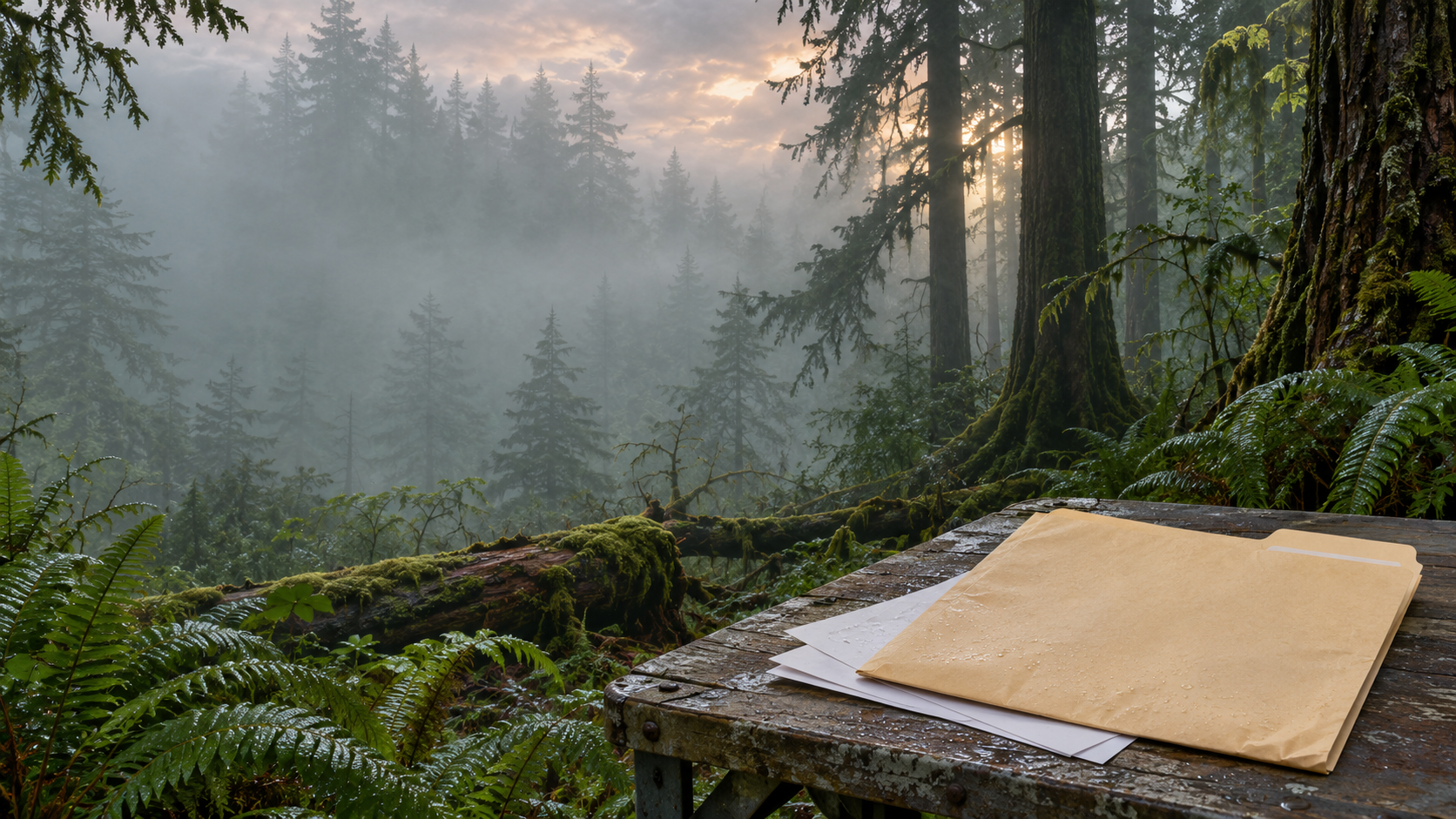
The United States has released federal records concerning suspected Bigfoot sightings in Montana and Oregon, renewing interest in one of North America’s most enduring legends. The documents describe reported encounters, alleged tracks, and how government officials handled unusual claims. They do not establish that Bigfoot exists.
The records are associated with the U.S. Department of Agriculture (USDA) and the U.S. Forest Service. They include historical material connected to reports made on or near federal land, along with a separate 1982 investigation into alleged Bigfoot tracks in Washington state. Source 1
A government file proves that someone made a report or that officials documented an incident. It does not prove that the reported creature was real. The files add historical context to the Bigfoot mystery, but they do not provide scientific confirmation.
What Did the US Government Release?
Records of reported Bigfoot sightings
The released material concerns alleged encounters and sightings reported to federal authorities. Some records relate to claims made in Montana and Oregon, while others describe the Forest Service’s response to alleged tracks in Washington.
A report can pass through several stages:
- A person sees something unusual and submits a report.
- An agency receives or forwards the report.
- Officials record the claim in correspondence, notes, or an investigative file.
- The material becomes part of an agency archive.
- The record is later released or reported on by the media.
Each stage documents an administrative event. None automatically verifies the original claim.
A citizen’s report is not an agency finding. An agency record is not scientific evidence. An investigation is not necessarily a confirmation. This distinction is central to understanding the released material.
Federal agencies named in the reports
The USDA released decades of records related to Bigfoot, including material associated with a 1982 U.S. Forest Service investigation in Washington state. Source 5
The Forest Service manages extensive public lands, including forests, mountains, watersheds, and recreation sites. Officials may receive reports involving wildlife sightings, unusual tracks, unidentified sounds, property damage, missing or injured visitors, and potential safety concerns.
A Bigfoot report may therefore enter an agency file because it concerns public land or visitor safety. That administrative connection does not mean the agency accepted Bigfoot’s existence or conducted a formal search for an undiscovered species.
Why the release attracted attention
Government documents involving Bigfoot attract attention because they combine an official setting with a folklore subject. A federal letter, field note, or investigation file can appear more authoritative than a private account.
The records may provide useful historical details, including dates, locations, witness statements, correspondence, and descriptions of official responses. They may also show uncertainty, incomplete information, or a lack of conclusive findings.
Media coverage described the Montana and Oregon material as records concerning suspected sightings, not proof of a real creature. Source 1
What Do the Files Say About Montana and Oregon?
Alleged sightings in Montana
Montana is among the states connected to the released reports. Available summaries identify the material as documentation of alleged sightings rather than confirmation of an animal species.
Montana’s forests, mountain ranges, remote watersheds, and public lands help explain why Bigfoot stories have become associated with the state. Low population density and limited visibility can make brief or distant observations difficult to interpret.
These environmental features may explain why people report unusual encounters. They do not demonstrate that Bigfoot lives in Montana.
The available summaries do not establish a confirmed location, identify witnesses, or provide independently verified descriptions of a creature. Those details should not be added without examining the original records. Responsible reporting should use terms such as “alleged sighting,” “reported encounter,” and “documented claim.”
Alleged sightings in Oregon
Oregon also appears in the released material. As with the Montana reports, the records document claims made to or handled by authorities. They do not establish that the sightings involved an unknown primate.
Oregon’s forests and mountainous terrain have contributed to the state’s long association with Bigfoot stories. Dense vegetation, distance, weather, terrain, and movement can distort an observer’s perception. A person may sincerely report seeing a large, humanlike figure while misidentifying a bear, another animal, a person, or a shadow.
Sincerity does not eliminate the possibility of error. Witnesses usually report what they believe happened, but belief and identification are separate questions.
The importance of careful wording
Descriptions of the files should distinguish documentation from verification. Appropriate wording includes:
- Alleged Bigfoot sighting
- Reported encounter
- Suspected Bigfoot activity
- Documented claim
- Investigation into alleged tracks
Statements such as “the government confirmed Bigfoot” or “federal records prove Bigfoot exists” are not supported by the available information.
The Separate Washington Case from 1982
The Mill Creek watershed investigation
A separate group of records concerns alleged Bigfoot tracks discovered in 1982 in Washington’s Mill Creek watershed. The U.S. Forest Service documented an investigation into the report, preserving the episode in federal records. Source 3
The Washington case should remain separate from the Montana and Oregon sightings. It concerns a different incident, state, and year. Combining them would exaggerate what the documents show.
The records establish that tracks were reportedly discovered, that the report reached the U.S. Forest Service, that officials documented or investigated the claim, and that the incident became part of the historical record.
They do not establish that Bigfoot made the tracks, that the tracks belonged to an unknown primate, that a previously unrecognized species was present, or that the investigation produced conclusive physical evidence.
The case illustrates the difference between an unusual report and a scientific conclusion. Important questions include whether investigators visited the site, photographed the impressions, recorded measurements, made casts, interviewed witnesses, or compared the tracks with known animals and human footprints.
A decades-old file may preserve valuable information while leaving the central question unresolved.
Do the Released Files Prove Bigfoot Exists?
Government records are not scientific confirmation
The released files do not prove that Bigfoot exists.
Administrative documentation, witness testimony, physical evidence, and peer-reviewed scientific evidence have different levels of evidentiary value. An agency can record a report without endorsing the witness’s interpretation. It can investigate a claim without reaching a positive conclusion.
The federal connection identifies who handled the report. It does not automatically validate the report itself.
Limits of eyewitness reports
Eyewitness reports can provide leads, but they are vulnerable to brief viewing periods, poor lighting, long distances, dense vegetation, weather, stress, unclear scale, local folklore, and misidentification of animals or people.
A witness may accurately describe what they thought they saw while being mistaken about its cause. Multiple reports do not become proof merely because they share a similar theme. Each claim requires separate evaluation.
Limits of alleged tracks
Relevant questions include:
- Were the tracks photographed clearly?
- Were measurements recorded?
- Was the soil stable enough to preserve details?
- Could a human-made impression explain the pattern?
- Were casts collected and authenticated?
- Were the tracks altered by weather or later activity?
- Were alternative explanations tested?
Unusual impressions alone do not establish the presence of an unknown species. Track evidence becomes more persuasive when it is securely documented, preserved, independently examined, and consistent with other physical findings.
What would stronger evidence require?
Evidence capable of changing scientific opinion would need to be independently verifiable. Examples could include:
- A verifiable body or biological sample
- DNA tested by independent laboratories
- Clear and authenticated footage
- Repeated observations by multiple trained witnesses
- Consistent physical evidence from separate locations
- Peer-reviewed analysis
- Transparent methods that other researchers can evaluate
Extraordinary claims require evidence that can be examined, tested, and independently reproduced.
Why Federal Agencies Keep Records of Unusual Wildlife Reports
Federal land agencies receive reports about ordinary wildlife, unusual tracks, unidentified sounds, property damage, and visitor safety concerns. A report may be retained because it relates to land management, even if officials consider the claim unlikely.
A Bigfoot report may therefore be treated as an unusual public inquiry rather than evidence of a new species.
Creating, retaining, or releasing a document does not mean an agency accepted the claim. Government files may contain incoming letters, internal memoranda, field notes, photographs, maps, witness statements, and administrative responses.
The official status of a document confirms that an agency preserved the record. It does not confirm the truth of every statement inside it.
Older records may become public through records-retention schedules, public-records requests, archival review, and agency release procedures. Media interest may draw attention to material that had been available but overlooked. A delayed release does not demonstrate a secret federal conclusion.
Bigfoot and American Folklore
Bigfoot occupies a major place in North American folklore. Stories about large, humanlike beings in wilderness areas have appeared in regional traditions, newspapers, television, films, books, and amateur investigations.
Indigenous traditions should be treated respectfully and not reduced to simple evidence for a modern cryptid claim. Different communities have distinct histories, beliefs, and cultural contexts. The modern popular image of Bigfoot developed through overlapping influences, including regional storytelling and twentieth-century media.
Montana, Oregon, and Washington receive attention because of their forests, mountain ranges, remote watersheds, and extensive public lands. These features create a powerful setting for wilderness legends and can make observation difficult. Dense forests can conceal ordinary animals, while rugged terrain can preserve or distort tracks.
Suitable habitat is not proof of an undiscovered animal. It is only part of the context in which reports arise.
Official-looking records can intensify public interest. A Forest Service memo or federal investigation file may appear more authoritative than an informal story. The authority of the document, however, concerns the agency’s role in recording or handling the report. It does not necessarily establish the truth of the alleged sighting.
What Readers Should Look For
Readers should determine whether each detail came from a witness, newspaper report, Forest Service employee, internal memorandum, field investigation, or later journalist. Firsthand observations should be separated from later retellings. A claim repeated in several documents may still trace back to one unverified account.
Readers should also distinguish the date of the incident from the dates of the report, investigation, and release. Locations may be precise or approximate, which affects the ability to revisit a site or evaluate environmental conditions.
The investigation method matters. Look for site visits, measurements, photographs, track casts, interviews, wildlife comparisons, laboratory testing, and written conclusions. The absence of a conclusion can be as important as a positive finding.
Alternative explanations should also be considered, including bears, humans, other wildlife, weather, terrain, hoaxes, misidentified objects, and deliberately created tracks. A report becomes more persuasive when competing explanations are tested rather than ignored.
What the Release Does Not Reveal
The available summaries do not indicate a formal federal program dedicated to proving that Bigfoot exists. They describe records of reported sightings and a Forest Service investigation, not a confirmed government search for a hidden species.
The files do not identify Bigfoot as a recognized animal species. They describe no confirmed biological discovery, authenticated specimen, or independently verified genetic evidence. Nothing in the release changes Bigfoot’s scientific status.
Each report must be evaluated separately. One unresolved sighting cannot validate every other claim, just as an ordinary explanation for one case does not necessarily explain every report.
Conclusion: The Files Add History, Not Proof
The United States released records concerning alleged Bigfoot sightings in Montana and Oregon, along with related federal material about a 1982 investigation into alleged tracks in Washington’s Mill Creek watershed.
The documents show that federal officials recorded unusual reports and, in at least one case, investigated alleged physical evidence. They provide historical context for how the USDA and U.S. Forest Service handled claims connected to public lands.
They do not establish that Bigfoot exists.
The records may interest historians, folklore researchers, journalists, and Bigfoot enthusiasts. Scientific confirmation would require independently verifiable physical evidence, such as authenticated biological material, reliable DNA testing, or another finding that outside experts can examine and reproduce.
Frequently Asked Questions
Did the US government confirm that Bigfoot exists?
No. The records document alleged sightings and investigations, but they do not confirm that Bigfoot is a real species.
Which states are mentioned in the released Bigfoot files?
The reports concern alleged sightings in Montana and Oregon. Related records describe a 1982 investigation into alleged tracks in Washington state.
What happened in the 1982 Washington Bigfoot case?
The U.S. Forest Service documented an investigation involving alleged Bigfoot tracks in Washington’s Mill Creek watershed. The records preserve the investigation’s history but do not prove that Bigfoot made the tracks.
Why would the Forest Service keep records about Bigfoot sightings?
The Forest Service manages public lands and may receive reports about unusual wildlife, tracks, sounds, property damage, or visitor safety concerns. Recording a report does not mean the agency accepted the claim.
Are eyewitness Bigfoot sightings reliable evidence?
Eyewitness reports can provide leads, but distance, visibility, stress, weather, movement, and misidentification can affect them. Stronger conclusions require physical evidence that independent experts can examine.
What evidence would prove Bigfoot exists?
Convincing evidence would likely include a verifiable body, authenticated biological material, independently tested DNA, or other physical evidence supported by transparent scientific analysis and peer review.
Related Articles
-
 COP31 Talks Collapse in Turkey Over Fossil Fuels
-
 Russian Cargo Ship Burning Off Finland After Suspected Drone Attack
-
 Why Kim Jong Un Keeps Building Nukes and Avoids Trump
-
 Red Cross Warns Time to Regulate Autonomous Weapons Is Short
-
 Two Passengers Arrested by ICE at Seattle Airport
-
 US Army Iowa Detonation Plan Faces Court Challenge
-
 Trump Nominees Face a Narrowing Senate Confirmation Window
-
 Russian Cargo Ship Reportedly Still Burning Near Finland
-
 South Korea Education Minister Resigns Over AI Exam Rules
-
 Europe Shrugs at Trump’s Yalta-Style Summit Push
-
 Turkey Draft Omits Fossil Fuels at UN Climate Talks
-
 USDA Bigfoot Files: What the Reported Release Reveals
-
 ICE Arrests Two at Seattle Airport, Governor Responds
-
 Two New Jersey Women Indicted Over Alleged Staged Attack
-
 11 Deaths in Alleged Mexican Cartel Capture Remain Unconfirmed
-
 Swim Highlights War’s Toll on Strait of Hormuz Wildlife