Stocks Rebound After $6 Trillion Selloff
Stocks Rebound After $6 Trillion Selloff: Nvidia, Micron, and SpaceX Recover
U.S. stocks reportedly moved from a $6 trillion market-value decline to a $3.5 trillion rebound, creating one of the sharpest reversals in recent market sentiment. Nvidia and Micron became central to the technology-led recovery narrative, while SpaceX represented renewed enthusiasm for high-growth private companies. Source 1
The rebound signals a rapid change in risk appetite, not proof that market risks have disappeared. If both figures refer to the same valuation period, the $3.5 trillion gain would recover only part of the reported $6 trillion decline. Investors must determine whether the move reflects improving fundamentals or a temporary rush into beaten-down assets.
What the $6 Trillion Selloff and $3.5 Trillion Rebound Mean
Market capitalization is not cash flow
A decline in market capitalization measures the fall in the value investors assign to publicly traded companies. It does not mean that exactly $6 trillion in cash left brokerage accounts or the financial system.
For example, if a company has one billion shares and its price falls by $10, its market value declines by $10 billion. The calculation applies the new market price across all shares, although only some shares may have traded at that price.
The same principle applies to a market-wide rebound. A reported $3.5 trillion increase describes the change in the value of listed companies, not necessarily the amount of new money invested in stocks. Trading volume, share prices, investor wealth, and cash flows are separate measures.
Why markets reverse quickly
Several forces can amplify a selloff or rebound:
- Large technology companies have substantial index weight.
- Options activity can accelerate buying and selling.
- Algorithmic strategies respond rapidly to price and volatility signals.
- Short sellers may buy shares to close bearish positions.
- Institutions may rebalance after a sharp decline.
- Lower prices can attract sidelined investors.
A concentrated market can therefore experience a broad index move even when a limited group of companies drives the change.
The rebound remains incomplete
If the $6 trillion decline came first and the $3.5 trillion gain followed, the market would still be below its earlier level by approximately $2.5 trillion on a simple arithmetic basis.
A durable recovery would likely require continued gains, broader participation, stronger earnings expectations, stable economic data, sustained volume, and lower volatility. A one-period rally can restore confidence temporarily, but it cannot confirm a lasting trend change.
Nvidia’s Role in the Recovery
Nvidia sits at the center of the artificial intelligence infrastructure cycle. Its products support data centers, cloud computing, advanced AI models, and high-performance computing. Demand for specialized processors has made the company a key indicator of technology-sector health.
Because Nvidia has a large market value and significant index weight, changes in its share price can influence both major benchmarks and sentiment toward related companies. A Nvidia rebound can lift semiconductor manufacturers, data-center suppliers, cloud companies, and other AI infrastructure businesses.
Strong expectations support Nvidia during a rally, but those expectations also create risks. Investors remain sensitive to slower revenue growth, changes in cloud-provider spending, export restrictions, new competition, supply-chain constraints, delivery delays, customer concentration, and weaker-than-expected AI monetization.
A report linking a market decline to oil prices and Nvidia highlights how company-specific and macroeconomic risks can overlap. Source 9
The available source does not establish that oil prices alone caused the decline. It does show why Nvidia can become a focal point when investors reassess growth stocks, inflation, and the cost of capital.
Key questions include:
- Did earnings expectations improve?
- Was buying driven by institutional demand or short covering?
- Are investors pricing Nvidia as a long-term AI leader or a high-volatility trading instrument?
- Can semiconductor demand justify its valuation?
- Will customers maintain aggressive infrastructure spending?
Nvidia’s recovery supports the broader market narrative, but it does not prove that every sector is recovering.
Micron and the Semiconductor Cycle
Micron is a major memory-chip manufacturer serving AI servers, data centers, smartphones, personal computers, automotive systems, and other technology markets. Its broad exposure makes the company a useful indicator of memory demand, device production, and industrial technology spending.
The memory industry is cyclical. Supply, inventory, pricing, and capital expenditure can change faster than long-term demand. AI systems require substantial memory capacity and bandwidth, so expanding data-center workloads could increase demand for advanced memory products.
This creates a potential connection between Nvidia and Micron. Nvidia supplies important processors, while memory manufacturers support the systems that allow those processors to operate at scale. Investors may buy both stocks when they expect sustained AI infrastructure growth.
The distinction between structural demand and short-term pricing remains important. AI may create a long-term expansion opportunity, but Micron’s quarterly results still depend on inventory, contract pricing, consumer-electronics demand, and production capacity.
Micron’s recovery could weaken if memory prices decline, customers carry excess inventory, smartphone and PC sales remain weak, cloud providers reduce capital expenditure, trade restrictions disrupt supply chains, competitors add capacity, or manufacturing costs rise. Evidence from pricing, orders, inventory, and management guidance matters more than a higher share price alone.
What the SpaceX Narrative Signals
SpaceX is generally treated as a privately held company rather than an exchange-listed stock. It does not trade like Nvidia, Micron, or Amazon on a public exchange.
Reports about SpaceX “shares” may refer to private-market transactions, employee or investor sales, secondary-market pricing, valuation estimates, financing activity, or public companies with indirect space-sector exposure.
A private valuation is not equivalent to a public-company closing price. Private transactions may involve limited liquidity, negotiated prices, ownership restrictions, and incomplete information.
SpaceX has become a symbol of private technology-market enthusiasm through launch services, satellite communications, space infrastructure, and ambitious growth plans. A recovery in SpaceX-related valuations may reinforce interest in innovative companies, future initial public offerings, and space-related businesses.
However, the available report provides no detailed SpaceX price, transaction volume, valuation, or timing data. The reference should therefore be treated as part of the broader recovery narrative, not as independently verified public-market performance. Source 1
Oil Prices and Technology Stocks
Oil prices affect markets through inflation, household purchasing power, transportation costs, and corporate expenses. Higher oil prices can increase fuel and logistics costs, manufacturing expenses, household energy bills, inflation expectations, and interest-rate expectations.
Technology stocks are especially sensitive to interest-rate expectations because their valuations often depend on earnings projected several years into the future. If investors expect higher rates, those future earnings become less valuable in present-value terms.
Oil prices do not determine Nvidia’s performance automatically. The relationship is indirect and depends on inflation, bond yields, monetary policy, and investor positioning. Source 9
Thanksgiving Week and Market Breadth
Pension Pulse described a strong stock-market rally during Thanksgiving week in 2026, but the supplied source provided no index gains, sector performance, trading-volume data, or detailed explanation. Source 3
Holiday weeks can distort market signals because participation may decline while large orders have a greater effect on prices. Seasonal optimism, portfolio repositioning, and year-end tax decisions can also influence trading.
Investors should examine equal-weight index performance, small-cap participation, advance-decline data, sector leadership, trading volume, and the number of stocks reaching new highs. If gains remain concentrated in a few mega-cap technology companies, the recovery may be more fragile than the headline index suggests.
Black Friday Spending and Amazon
Holiday spending can influence expectations for retail sales, e-commerce revenue, advertising, logistics, and consumer confidence. Finviz examined whether record Black Friday spending could support Amazon stock, but the supplied source provided no detailed performance figures or confirmed market reaction. Source 5
Strong Black Friday demand could help Amazon through higher merchandise sales, increased marketplace activity, greater advertising revenue, higher logistics utilization, and stronger holiday-quarter revenue expectations.
Sales growth does not automatically produce stock gains. Investors must also consider discounts, shipping costs, labor expenses, consumer credit stress, and operating margins. Amazon is therefore a potential catalyst, not a confirmed driver of the reported $3.5 trillion rebound.
Economic Events That Could Determine the Next Move
The Yahoo Finance Economic Events Calendar provides a schedule of market-moving events. Source 7
Relevant releases may include inflation, employment, consumer spending, manufacturing, housing, interest-rate decisions, and corporate earnings. The market response will depend on how each result compares with expectations.
Easing inflation and resilient employment could support stocks by improving confidence and reducing pressure on interest rates. Strong economic activity could also delay monetary easing if inflation remains elevated.
Renewed selling pressure could follow persistent inflation, higher-for-longer interest rates, weak consumer demand, rising unemployment, deteriorating corporate guidance, higher oil prices, or disappointing semiconductor orders.
Durable Recovery or Relief Rally?
A durable recovery would require continued earnings growth from major technology companies, sustained AI infrastructure spending, improving semiconductor pricing, broader sector participation, stable consumer spending, favorable economic data, declining volatility, and stronger participation from small and mid-sized companies.
The move may prove temporary if gains remain concentrated in Nvidia and a few technology names, market breadth stays weak, short covering accounts for much of the buying, oil prices continue rising, valuations remain stretched, economic data disappoints, earnings guidance weakens, or momentum fades after the holiday period.
Investors should monitor Nvidia and Micron guidance, semiconductor pricing, Treasury yields, oil futures, consumer-spending data, and the economic-events calendar. Private-market valuation updates involving SpaceX require separate analysis because they do not provide the same information as public-company earnings reports.
Investor Takeaways
- A reported $3.5 trillion rebound does not erase the earlier $6 trillion decline.
- Nvidia remains a major test of market leadership because of its size and AI exposure.
- Micron offers insight into memory demand and the semiconductor cycle.
- SpaceX should be analyzed as a private company, not a standard publicly traded stock.
- Oil prices can affect inflation expectations and technology valuations.
- Black Friday spending may influence Amazon expectations, but margins matter as much as revenue.
- Economic data will determine whether optimism receives fundamental support.
- Market breadth, earnings, valuation, and trading volume matter more than a single headline gain.
Conclusion
Stocks reportedly moved from a $6 trillion decline to a $3.5 trillion rebound, with Nvidia, Micron, and SpaceX central to the recovery narrative. The reversal demonstrates how quickly investor sentiment can change when lower prices attract buyers and technology leadership returns.
The rebound is meaningful but incomplete. Nvidia must maintain AI-driven demand, Micron must show improving memory conditions, and SpaceX-related enthusiasm must be distinguished from public-market evidence. Oil prices, consumer spending, economic data, and market breadth will determine whether the recovery extends beyond a short-lived relief rally.
The next confirmation points are corporate earnings, semiconductor orders, inflation, interest-rate expectations, holiday spending, and broader participation. If those indicators improve together, the recovery may become more durable. If they weaken, the reported $3.5 trillion gain could represent only a temporary pause in a broader period of volatility.
FAQ
How much did the stock market recover after the $6 trillion selloff?
The supplied report describes a subsequent $3.5 trillion surge after a previous $6 trillion decline. These are reported market-value changes, not identical amounts of cash entering and leaving the market.
Why did Nvidia contribute so much to the rebound?
Nvidia has a large market value and significant exposure to AI infrastructure, data centers, and advanced semiconductors. Changes in investor expectations can influence major indexes and related technology stocks.
Is SpaceX publicly traded?
SpaceX is generally treated as a privately held company, not a standard exchange-listed stock. References to SpaceX shares may involve private transactions, secondary-market pricing, or valuation estimates.
Could Micron’s recovery signal a stronger semiconductor cycle?
A Micron rebound may reflect expectations for stronger memory demand from AI data centers and other technology markets. Confirmation requires evidence from pricing, inventory, customer orders, and company guidance.
Can Black Friday spending lift Amazon stock?
Strong Black Friday spending could improve expectations for Amazon’s retail, advertising, and logistics businesses. The stock’s response will also depend on margins, operating costs, consumer credit conditions, and whether results exceed expectations.
What could reverse the stock-market rebound?
Renewed selling could follow higher oil prices, persistent inflation, rising interest-rate expectations, weak economic data, disappointing earnings guidance, or narrow market breadth. A rebound concentrated in a few technology stocks may also remain vulnerable.
Related Articles
-
 Nvidia Blackwell Chips Reportedly Found in China
-
 Best Black Friday Deals Under $50 for Every Budget
-
 The Political Cost of Trump’s Loyalty to Jensen Huang
-
 Dow Rally on Nov. 27, 2026 Requires Verification
-
 41+ Black Friday Deals Under $50 on a Budget
-
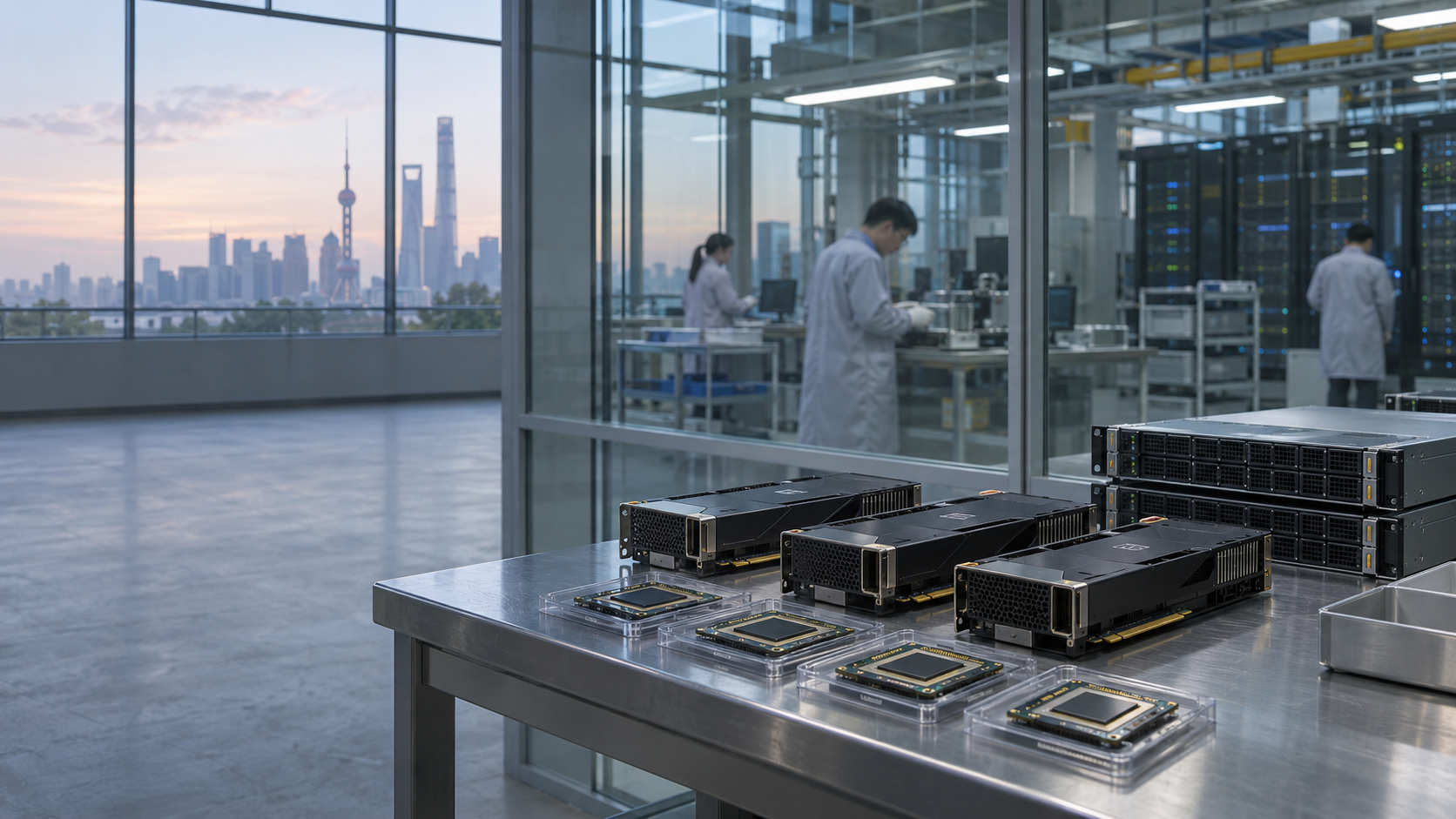 Nvidia Blackwell Chips Reportedly Found in Shanghai
-
 Pizza Hut Cofounder Dan Carney Dies at 90
-
 Dow, S&P 500 and Nasdaq Rally More Than 1%
-
 How Inflation Is Driving Value-Seeking Black Friday Shoppers
-
 Trump Calls for GDP Probe as Rate-Hike Odds Rise
-
 Asian Markets Rise as AI Sentiment Stabilizes
-
 Asian Stocks Rebound as AI Sentiment Stabilizes
-
 Cautious Consumers Prepare for Black Friday Amid Inflation
-
 China Signals Stronger Support for Stock Markets
-
 Stock Market Today: Futures Rise as AI Jitters Ease
-
 Trump Calls Pre-Midterm GDP Figures “Fake”