Pakistan Sends Troops to Saudi Arabia Amid Houthi Threats
Pakistan Sends Troops to Saudi Arabia Amid Houthi Threats
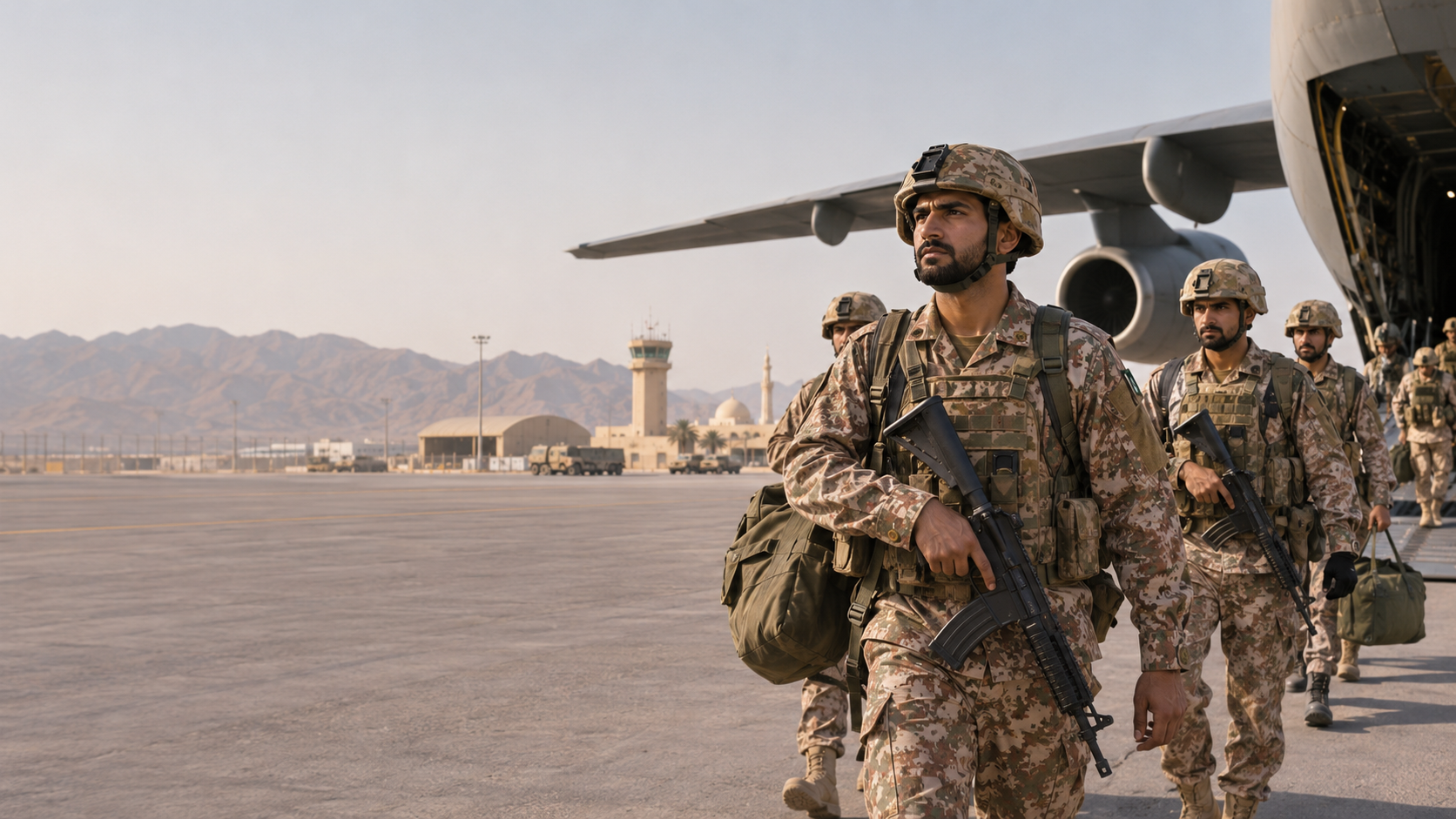
Pakistan is reportedly sending troops to Saudi Arabia to strengthen the kingdom’s defenses after attacks attributed to Yemen’s Houthi movement. The deployment comes as Riyadh relies on security partnerships to protect its territory and strategic infrastructure amid continuing regional tensions.
Reports from The New York Times, NPR, ABC News, and Middle East Eye describe the move as defensive. The Associated Press has also reported that Pakistan and Turkey pledged to support Saudi Arabia against Houthi attacks under a defense pact. Source 1
The available reporting does not establish that Pakistan has declared war on the Houthis or that Pakistani forces will conduct offensive operations in Yemen. It also provides no verified information about troop numbers, deployment dates, locations, equipment, mission length, or rules of engagement.
That distinction matters. A deployment to reinforce Saudi defenses could involve air-defense personnel, trainers, advisers, logistics specialists, or units protecting strategic facilities. It does not automatically mean Pakistani forces will enter combat against the Houthis.
What the Deployment Means
Pakistan Is Reinforcing Saudi Defenses
Multiple reports state that Pakistan will send troops to Saudi Arabia after Houthi attacks increased pressure on the kingdom. NPR described the deployment as an effort to strengthen Saudi defenses, while ABC News reported the same central development without providing further operational details. Source 5 Source 9
The reports do not identify:
- The number of Pakistani troops.
- Their arrival date.
- Their bases or operating areas.
- The mission’s duration.
- Their equipment.
- Their chain of command.
- Whether they will operate near the Saudi-Yemeni border.
“Supporting Saudi Arabia’s defense” could include air defense, border security, training, intelligence coordination, logistics, or protection of important facilities. The supplied reporting does not confirm which tasks the forces will perform.
The Deployment Tests a New Defense Pact
The reported deployment gives practical meaning to the Pakistan-Saudi Arabia defense pact. A political agreement can express solidarity or establish consultation mechanisms. A troop deployment represents a more concrete level of cooperation.
Middle East Eye described the move as Pakistan sending troops to Saudi Arabia while Houthi attacks test the countries’ new defense pact. Source 7
Three stages should be distinguished:
- Political commitment: Pakistan and Saudi Arabia agree to cooperate.
- Military deployment: Pakistani personnel are sent to Saudi Arabia.
- Direct combat: Pakistani forces conduct offensive operations against Houthi targets.
The available reporting establishes or consistently describes the first two stages. It does not confirm the third. The mission’s rules, command structure, and limits will determine the pact’s significance.
Why Saudi Arabia Wants Additional Support
The Houthis are a Yemen-based armed movement involved in Yemen’s prolonged conflict. Saudi Arabia shares a border with Yemen, making attacks connected to the conflict a direct security concern.
The supplied reports refer generally to Houthi attacks but do not provide verified details about specific incidents, dates, damage, or casualties. Broader reporting has associated Houthi operations with missile and drone threats, border risks, and potential dangers to energy and transport infrastructure. Those categories should not be treated as details of the latest attacks unless confirmed independently.
A visible Pakistani deployment could strengthen Saudi deterrence by signaling that attacks on the kingdom may bring a wider international response. Potential areas of assistance include:
- Air and missile defense.
- Border surveillance.
- Protection of strategic facilities.
- Military training.
- Intelligence cooperation.
- Logistics and technical support.
None of these functions has been confirmed for the current deployment. If Pakistan emphasizes territorial defense and facility protection, the mission may be intended to limit escalation. If it becomes associated with offensive planning, opposing groups could interpret it as direct participation in the wider conflict.
Pakistan and Saudi Arabia’s Security Relationship
Pakistan and Saudi Arabia have maintained close political, economic, and security ties for decades. Saudi Arabia is important to Pakistan as a financial and energy partner, while Pakistan offers military expertise and an established defense institution.
The current deployment should be understood within this broader relationship. It may reflect an effort to turn long-standing political and military connections into a more formal security framework rather than a response to a single attack.
The exact terms of the reported defense pact remain unclear. The supplied material provides no details about automatic military obligations, joint command, consultation procedures, or geographic limits.
Islamabad also faces a difficult diplomatic calculation. Supporting Saudi Arabia can strengthen bilateral relations, but a larger military role could expose Pakistan to regional escalation, retaliation, domestic opposition, and pressure to participate in operations beyond Saudi territory.
Important unanswered questions include whether Parliament will review the arrangement, whether the deployment has an end date, and whether Pakistani forces can operate outside Saudi territory.
Turkey’s Role
The Associated Press summary reports that Pakistan and Turkey pledged to support Saudi Arabia against Houthi attacks under a defense pact. Source 3
Turkey’s reported involvement gives the arrangement wider significance. However, the available information does not say whether Turkey will deploy troops, supply weapons, share intelligence, conduct joint exercises, provide air-defense capabilities, or offer diplomatic support only.
A pledge of support does not necessarily involve a troop deployment. The pact should not be described as a formal regional military alliance unless its text confirms that status. Further reporting must clarify whether it creates a standing security mechanism or responds only to the current crisis.
What Is Known and Unknown
The available reporting consistently supports these points:
- Pakistan is reported to be sending troops to Saudi Arabia.
- The stated purpose is to strengthen Saudi defenses.
- The deployment follows attacks attributed to the Houthi movement.
- Major news organizations have reported the deployment or related security commitments.
- Pakistan and Turkey are reported to have pledged support for Saudi Arabia under a defense pact.
The New York Times summary says Pakistan sent troops to support the kingdom’s defense amid its conflict with the Houthis. Source 1
The supplied sources do not verify troop numbers, deployment dates, bases, mission length, command arrangements, weapons, rules of engagement, border assignments, naval participation, special operations, training roles, or whether the mission is temporary or permanent.
Claims based on source entries containing figures such as “100+,” “500+,” “1000+,” or “2000+” should not be treated as verified estimates without substantive evidence or publication details.
Readers should distinguish reported facts from analysis. Appropriate language includes “according to reports,” “the available reporting indicates,” and “officials have not publicly detailed.” Headlines describing a “war with the Houthis” may refer to the broader Saudi-Houthi conflict; they do not prove that Pakistan has entered direct combat.
Potential Missions
Pakistani forces could assist with air and missile defense, border surveillance, infrastructure protection, training, advisory support, logistics, or technical operations. Such roles could strengthen Saudi capabilities without placing Pakistani troops in offensive operations.
No supplied source confirms any specific function or operating area. It would be inaccurate to say that Pakistani troops have been assigned to the Saudi-Yemeni border or to offensive operations in Yemen without official confirmation.
Regional Implications
Additional defensive support may improve Saudi detection, interception, and facility protection while signaling stronger external backing. It is unlikely to end the conflict by itself; its effect will depend on the deployment’s scale, capabilities, duration, and mandate.
A defensive deployment could still be interpreted by opposing groups as broader military involvement. Possible consequences include retaliatory threats, attacks on military personnel, an expanded geographic conflict, greater pressure on Pakistan, and increased risks to energy and transport infrastructure.
A clearly limited defensive mandate may reduce these risks. Ambiguous responsibilities could increase them. Pakistan may seek to support Saudi territorial defense while rejecting offensive expansion to preserve diplomatic flexibility.
What to Watch Next
The most important information should come from Pakistani and Saudi defense ministries, foreign ministries, and military spokespeople. Watch for announcements about troop numbers, arrival dates, locations, objectives, duration, command arrangements, and rules of engagement.
Verified reporting may also clarify whether Pakistani units have arrived and whether they are involved in joint exercises, air-defense operations, border deployments, or facility protection. Unverified social media imagery and anonymous claims should not be treated as proof of deployment size or combat activity.
Further reporting should explain whether the pact is bilateral, multilateral, temporary, or permanent, and whether Turkey will provide practical military assistance beyond its reported pledge.
Conclusion
Pakistan is reported to be sending troops to Saudi Arabia after Houthi attacks increased pressure on the kingdom. The move demonstrates the practical importance of the Pakistan-Saudi security relationship and gives the reported pact its first major test.
Turkey’s reported support adds regional significance, but the arrangement’s full scope remains unclear. No verified source in the supplied material provides troop numbers, locations, mission duration, equipment, command arrangements, or rules of engagement.
Until governments publish more details, the deployment should be described as reported defensive support—not as a confirmed Pakistani offensive against the Houthis.
Frequently Asked Questions
Why is Pakistan sending troops to Saudi Arabia?
Pakistan is reportedly sending troops to strengthen Saudi Arabia’s defenses after attacks attributed to Yemen’s Houthi movement. The available reports do not specify the exact mission, troop numbers, or deployment locations. Source 5
Is Pakistan joining the war against the Houthis?
The reported purpose is defensive support for Saudi Arabia. The supplied source summaries do not confirm that Pakistani forces will conduct offensive operations against the Houthis or deploy into Yemen.
How many Pakistani troops are being sent?
No verified troop number appears in the supplied reports. Low-information source entries should not be treated as confirmed estimates.
What does the Pakistan-Saudi defense pact include?
The pact is described as a framework for security support. Its full terms, command structure, response obligations, and rules of engagement have not been detailed in the supplied material.
Is Turkey also supporting Saudi Arabia?
Yes. The Associated Press summary reports that Pakistan and Turkey pledged to support Saudi Arabia against Houthi attacks. It does not confirm whether Turkey will deploy troops, supply equipment, share intelligence, or provide another form of assistance. Source 3
Could the deployment escalate the regional conflict?
It could increase escalation risks if opposing groups view the deployment as direct military involvement. The impact will depend on the mission’s scope, rules of engagement, duration, and whether Pakistani forces remain limited to defensive duties.
Related Articles
-
 Spain Turnout Reaches 45.74% by 2 p.m.
-
 Eisenkot Ends Reported Talks With Netanyahu
-
 Argentina Loses Bid to Halt Falklands Oil Project
-
 Golfers Return to D.C.’s East Potomac Golf Course
-
 Six Republican Senators to Watch for Bipartisan Deals
-
 Six Trump Cabinet Officials Facing Congressional Scrutiny
-
 Mover’s Remorse: Should Conservatives Leave California?
-
 Russia Claims It Downed 1,000 Ukrainian Drones
-
 Spain Election: Housing Crisis and Far-Right Gains
-
 Pakistan Deploys Troops to Saudi Arabia: What We Know
-
 UK DWP Cyberattack Disrupts Pension and Benefit Services
-
 4.2-Magnitude Earthquake Reported in Los Angeles
-
 Vermont Father-Son Detectives Solve 1986 Cold Case
-
 Somali American Uber Driver Dies After Minnesota Attack
-
 Trump Calls D.C. Golf Course Flooding an “Act of God”
-
 Netanyahu Offers Eisenkot First Turn in Power-Sharing Plan